 Are you planning to attend PulpFest 2016? You’re probably wondering what to expect from next year’s convention. PulpFest is known for its great programming, and the line-up that we’re planning for our 2016 convention is shaping up to be one of our best.
We’ll be saluting a wide range of anniversaries at this summer’s pulp con: the tenth anniversary of Sanctum Books; the eightieth anniversary of The Whisperer and The Skipper; the ninetieth anniversary of Amazing Stories, the first science-fiction pulp; the hundredth anniversary of the specialty pulp; the 120th anniversary of The Argosy, the original pulp magazine; and the 150th birthday of H. G. Wells!
To give you an idea of what you’ll encounter from July 21 through July 24 at the Hyatt Regency and the city’s spacious convention center in the Columbus, Ohio, Arena District, below is the proposed schedule for PulpFest 2016. We hope to see you there.
PulpFest 2016 Schedule
Thursday, July 21, 2016
Dealers’ Room
4:00 PM – 11:00 PM — Dealers’ Room Set-Up
4:00 PM – 8:00 PM — Early Registration
6:00 PM – 9:00 PM — Dealers’ Room Opens for Early-Bird Shopping
Programming
9:10 – 9:55 PM — Street & Smith’s Second Stringers — The Whisperer and The Skipper (Will Murray)
10:05 – 10:50 PM — Traveling through Time with H. G. Wells (Garyn Roberts)
11:00 PM — Pulps in the Pub (join your friends in the hotel bar and talk pulp)
Friday, July 22, 2016
Dealers’ Room
9:00 AM – 10:00 AM — Early Registration and Dealers’ Room Set-Up
10:00 AM – 4:45 PM — Dealers’ Room Open to All
Programming
1:00 – 1:50 PM — The New Fictioneers – Danny Adams will read from A HOLE IN WEDNESDAY, a prequel to DAYWORLD, co-written by Philip José Farmer
1:55 – 2:45 PM — The New Fictioneers – Christopher Paul Carey will be reading from BLOOD OF ANCIENT OPAR
2:50 – 3:40 PM — The New Fictioneers – Win Scott Eckert will read from BEING AN ACCOUNT OF THE DELAY AT GREEN RIVER, WYOMING, OF PHILEAS FOGG, WORLD TRAVELER, OR, THE MASKED MAN MEETS AN ENGLISH GENTLEMAN
3:45 – 4:35 PM — The New Fictioneers – John Hegenberger will read “Cicatrix,” originally published in AMAZING STORIES in 1990
6:55 – 7:00 PM — Welcome to PulpFest 2016 (Convention Chairman Jack Cullers)
7:00 – 7:40 PM — FarmerCon XI — Collaborating with Philip José Farmer (moderator Paul Spiteri with Danny Adams, Christopher Paul Carey, and Win Scott Eckert)
7:50 – 8:35 PM — The Artists of THE ARGOSY — 120 Years of Sensational Pulp Artists (David Saunders)
8:45 – 9:30 PM — The First Science-Fiction Pulp — An AMAZING Story (Joseph Coluccio, president of the Pittsburgh Area Fantasy and Science Fiction Club)
9:40 – 10:20 PM — 100 Years of the Specialty Pulp — LOVE STORY MAGAZINE and its Romantic Sisters (Laurie Powers)
10:30 – 11:15 PM — 100 Years of the Specialty Pulp — WESTERN STORY MAGAZINE and the Pulp Western (Will Murray)
Saturday, July 23, 2016
Dealers’ Room
10:00 AM – 4:45 PM — Dealers’ Room Open to All
10:00 AM – 10:00 PM — Gaming Track (Clark Room, Second Floor of the Hyatt Regency)
Programming
1:00 – 1:50 PM — The New Fictioneers – Duane Spurlock, who writes adventure fiction and fantasy-oriented action tales, will read from a recent work
2:00 – 2:50 PM — Writing Hero Pulp — moderator Ron Fortier with “New Pulp” authors Barbara Doran, Win Scott Eckert, Andy Fix, and Jeff Fournier
3:00 – 3:50 PM — Ten Years in The Shadow’s Sanctum — Anthony Tollin’s Sanctum Books
5:00 – 6:50 PM — PulpFest 2016 Group Meal at a Dick’s Last Resort (Volunteer coordinator Sally Cullers)
7:00 – 7:20 PM — 2016 Munsey Award Presentation (presented by J. Randolph Cox or Stephen T. Miller)
7:30 – 8:15 PM — Our Guest of Honor (Ted White, editor emeritus of AMAZING STORIES)
8:25 – 9:10 PM — 120 Years of THE ARGOSY — The World’s First Pulp Magazine (Doug Ellis)
9:20 – 9:40 PM — PulpFest 2016 Business Meeting (meet the convention organizers)
10:00 PM – ??— Saturday Night at the Auction (John Gunnison & Joseph Saine)
Sunday, July 24, 2016
Dealer’s Room
10:00 AM – 2:00 PM — Dealers’ Room Open to All (many dealers will be packing up; buying opportunities may be limited)
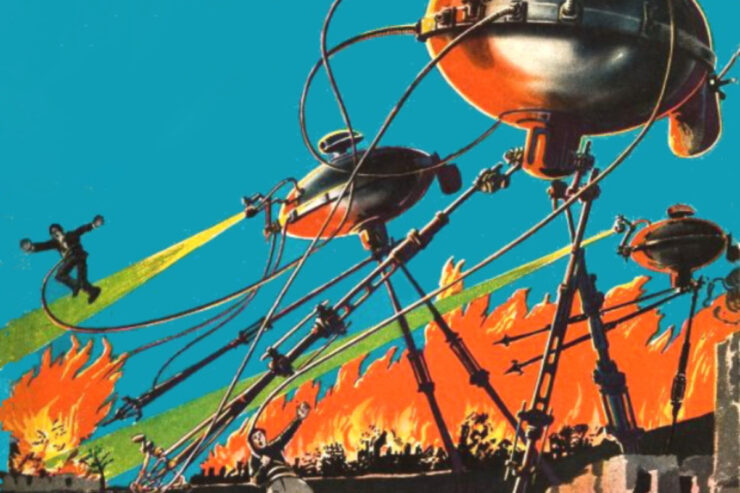
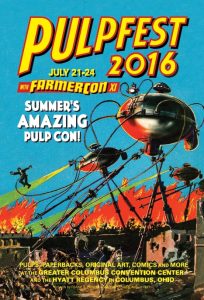
Frank R. Paul, the “grandfather of science-fiction art,” painted the cover of the August 1927 issue of Amazing Stories, illustrating the first half of the classic H. G. Wells novel, “The War of the Worlds,” which the magazine serialized in two parts. Bill Lampkin adapted his cover for our 2016 postcard.
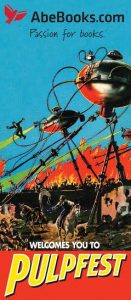 AbeBooks Welcomes You to PulpFest—our convention has a new sponsor. It’s AbeBooks.com, an online marketplace for millions of brand-new, used, rare, and out-of-print books from around the world.
Just like PulpFest, our new sponsor has a passion for books. Booksellers love AbeBooks for helping them to sell books to buyers around the globe – 24 hours a day, 365 days a year. Buyers love AbeBooks for helping them find and purchase books from its vast online inventory, spanning six international sites worldwide.
PulpFest is extremely pleased to welcome AbeBooks as a sponsor. AbeBooks has not only added its name to our growing list of website sponsors, but it has also asked to sponsor this year’s PulpFest name tags and program guides. Additionally, AbeBooks will be offering two hardcover copies of the fourth volume in Mike Ashley’s HISTORY OF THE SCIENCE-FICTION MAGAZINE as door prizes at the July convention. Valued at over $100 each, PulpFest will be randomly selecting two members present at this year’s convention to receive hardbound copies of Mike Ashley’s new work of science fiction scholarship.
AbeBooks remains a company with a passion for books and for pulps! Be sure to watch for the AbeBooks banner at PulpFest 2016, and you may be one of our two lucky winners who take home a copy of Mike Ashley’s SCIENCE FICTION REBELS.
We hope to see you at “Summer’s AMAZING Pulp Con,” running from Thursday evening, July 21 through Sunday afternoon, July 24, at the Hyatt Regency Hotel and the city’s spacious convention center in the Columbus Arena District. You’ll have a FANTASTIC time!
Throughout the year, PulpFest has used Frank R. Paul’s cover art from the August 1927 issue of Amazing Stories, illustrating H. G. Wells’ “War of the Worlds,” to publicize the convention. Watch for it again as AbeBooks.com welcomes you to this year’s edition of “Summer’s AMAZING Pulp Con!”
Who will be selling at PulpFest 2016? — Although PulpFest is well known for its excellent programming, it is also lauded for its very substantial dealers’ room. Beginning Thursday, July 21, the 15,800-square-foot Regency Ballroom at the Hyatt-Regency Columbus will feature collectible pulp magazines and digests, vintage paperbacks, first-edition hardcovers and series books, original art, B-movies and serials, collectible comic books, and more. And remember, members staying at our host hotel can enjoy free early-bird shopping on Thursday evening from 6 to 9 PM. If you’re staying elsewhere, early-bird shopping privileges will cost an additional $30. Below are our 2016 dealers, listed alphabetically.
Adventure House (John Gunnison), Age of Aces (Chris & David Kalb), Airship 27 Productions (Ron Fortier & Rob Davis), Jim & Walter Albert, All American Comics and Collectibles (Gene Carpenter), Battered Silicon Dispatch Box (George Vanderburgh), Nick Certo, Chaska Books (Jonathan Sweet), Jack Cullers, Curious Bookshop (Ray Walsh), Darkstar Books (Gary Diedriech), Dearly Departed Books (Scott & Linda Edwards), Dreamhaven Books (Greg Ketter), Doug Ellis & Deb Fulton, Fantasy Publishing (Dick & Norma Enos), Phil Farina, Flinch! Books (Jim Beard & John Bruening), Bob Flowers, Martin Grams, Larry “Doc” & Jasper Grubb, Mark Halegua, Rick Hall, John Hauser, Heartwood Auctions (Kara Accettola, Richard Meli, & Emma Sloan), Paul Herman, Mark Hickman, Kubik’s Fine Books (Owen Kubek & Rachell Chilton), Dave LePlae, John McMahan, Walker Martin, William Patrick Maynard, Meteor House, Mike Chomko Books, Murania Press (Ed Hulse), Will Murray, Phil & Holly Nelson, Laurie Powers, Garyn & Virginia Roberts, Rosewood Books (Kent Peasley), Sanctum Books (Anthony Tollin), David Saunders, Skeptic Collectibles (Tom Skemp), Tim’s Books (Tim Paxton), Barry Traylor, Sheila Vanderbeek, Jon Wehler, Chuck Welch, Dave Willoughby, and Ygor’s Books (Cathy & Larry Hallock).
The Pulpster #25
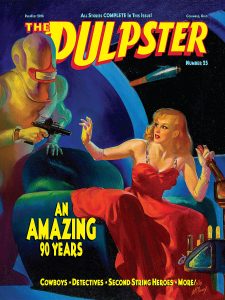 A longstanding tradition cherished by attendees of summer pulp cons, THE PULPSTER #25 will be released at PulpFest 2016. Every member — including supporting members — of PulpFest will receive a complimentary copy of the new issue.
The centerpiece of the issue is “90 years of AMAZING STORIES,” a collection of essays on the history and legacy of the first all-science-fiction pulp magazine written by many of its editors, including founder Hugo Gernsback, Howard Browne, Joseph Wrzos (Joe Ross), Barry N. Malzberg, PulpFest 2016 Guest of Honor Ted White, Elinor Mavor, and Patrick L. Price.
Dr. Art Sippo looks at the AMAZING STORIES of Philip José Farmer, who had four tales published in the digest during the 1960s and ’70s. Remember, FarmerCon XI takes place alongside PulpFest 2016.
On a topic every pulp collector should pay attention to but often ignores, David W. Smith explains how planning ahead can ensur- your pulp-collecting efforts won’t be squandered after you’re gone.
J. Randolph Cox, the 2014 Munsey Award winner, celebrates the 100th anniversary of DETECTIVE STORY MAGAZINE, while THE PULPSTER‘s editor, Bill Lampkin, marks 80 years since THE WHISPERER and THE SKIPPER tried to take Street & Smith’s hero pulps in a new direction.
David M. Earle examines HARLEM STORIES, Wallace Thurman, and African-American writers in the pulp magazines. The issue also includes Michael Bittner’s short story, “No Greater Love,” from HARLEM STORIES, reprinted in its entirety.
Walker Martin hits the lonesome trail with an article about collecting the long-running pulp WESTERN STORY MAGAZINE.
Rounding out the issue are columns by Editor Lampkin, Publisher Michael Chomko, and Final Chapters, in which Tony Davis remembers those of the pulp community who have recently passed away.
A longstanding tradition cherished by attendees of summer pulp cons, THE PULPSTER #25 will be released at PulpFest 2016. Every member — including supporting members — of PulpFest will receive a complimentary copy of THE PULPSTER.
William Lampkin adapted Harold W. McCauley’s original cover art for the August 1942 issue of Amazing Stories as the cover for The Pulpster #25.
An Amazing Story—One of the major themes of PulpFest 2016 will be the 90th anniversary of the first continuing science-fiction magazine, AMAZING STORIES. In addition to our Guest of Honor, Ted White – the magazine’s longest-serving editor (and its companion title, FANTASTIC) – we’ll offer a presentation on the magazine itself, put together by Joseph Coluccio, president of the Pittsburgh Area Fantasy and Science Fiction Club. Mr. Coluccio will discuss the pulp era of AMAZING, when Hugo Gernsback, T. O’Connor Sloane, Ray Palmer, William Hamling, and Howard Browne helmed the world’s first science-fiction magazine.
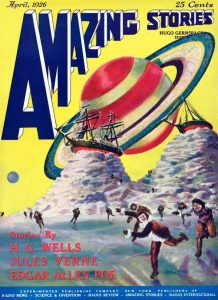 AMAZING STORIES debuted on March 10, 1926. Its inaugural issue really stood out on the newsstand. It was larger than the typical pulp magazine, with three-dimensional block letters trailing across its masthead and a bright yellow background framing an alien landscape, a ringed planet and a small moon. Frank R. Paul painted the cover, which illustrated Verne’s “Off on a Comet.”
The names on the front cover of the magazine’s early issues were also major selling points: Edgar Allan Poe, Jules Verne, H. G. Wells, Garrett P. Serviss, Edgar Rice Burroughs, A. Merritt, and others. The readers of AMAZING “… wanted to be entertained, to escape, to experience that sense of wonder that good visionary fiction brought.”
Using stories drawn from the Munsey magazines, BLUE BOOK, THE STRAND, and other sources, Gernsback offered reprints of science-fiction classics, eventually coupling these with new stories generated through contests. Through various competitions, Gernsback began to acquire a stable of new writers willing and able to write scientifiction: Miles J. Breur, Clare Winger Harris, David H. Keller, S. P. Meek, H. Hyatt Verrill, Harl Vincent, and others. Through his letter column, “Discussions,” he drew readers into his world of wonder.
Within months, the new specialty magazine was selling over 100,000 copies per issue. By establishing the first specialized science-fiction magazine, Gernsback tapped a vein of wonder shared by lonely individuals prone to “imaginative flights of fancy.” Next would come AMAZING STORIES ANNUAL, published in the summer of 1927 and featuring Edgar Rice Burroughs’ “The Mastermind of Mars.”AMAZING STORIES QUARTERLY followed in the winter of 1928. Then, in the August 1928 number of AMAZING STORIES, Gernsback introduced his readers to E. E. “Doc” Smith’s “The Skylark of Space” and Philip Francis Nowlan’s “Armageddon—2419 AD,” featuring Anthony “Buck” Rogers. These two “space operas” would color science fiction for well over a decade, turning it into “that crazy Buck Rogers stuff.”
Despite its seeming success, the Gernsback publishing empire continually struggled with cash flow. By plowing money into his radio interests and paying himself and his brother extremely hefty salaries, Gernsback offered generally low word rates. Coupled with a slow payment schedule, often months after a story had been published, few authors were interested in writing for the company. In early 1929, Gernsback’s suppliers demanded payment on past-due bills, leading the publisher to file for bankruptcy. Experimenter Publishing Company went into receivership, ending Hugo Gernsback’s involvement with the first science-fiction pulp, AMAZING STORIES.
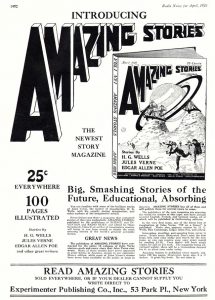 Another theme of PulpFest 2016 – the 150th anniversary of H. G. Wells’ birth – will likewise tie into our AMAZING story. Herbert George Wells, who rose to prominence in the late nineteenth century, was educated in the sciences and was a literary genius. It’s impossible to deny Wells’ importance to the development of both science fiction and AMAZING STORIES. Along with Ray Cummings, Edgar Allan Poe, and Jules Verne, Wells is mentioned in the advertising copy for the first issue of the new science fiction magazine. The ad ran in the April 1926 issue of RADIO NEWS.
During his three years as editor and publisher of the first science-fiction magazine, Gernsback turned to Wells’ fictional output for nearly thirty stories, reprinting such tales as “The Country of the Blind,” “The Crystal Egg,” “The Empire of the Ants,” “The First Men in the Moon,” “The Invisible Man,” “The Island of Dr. Moreau,” “The Man Who Could Work Miracles,” “A Story of the Days to Come,” “The Time Machine,” “The Valley of the Spiders,” “The War of the Worlds,” and “When the Sleeper Wakes” in his flagship title and its companions.
Our presentation, “Traveling through Time with H. G. Wells,” will feature Garyn G. Roberts, winner of the 2013 Munsey Award. Professor Roberts has written extensively about the pulps, both professionally and as a fan. His work, THE PRENTICE HALL ANTHOLOGY OF SCIENCE FICTION AND FANTASY, a college-level textbook, is notable for the attention paid to the pulp magazines.
These are just some of the ways PulpFest 2016 will celebrate ninety years of the first science-fiction magazine: AMAZING STORIES. We hope you’ll join us from July 21 through July 24 at the Hyatt Regency and the city’s spacious convention center in the Columbus Arena District for “Summer’s AMAZING Pulp Con!”
The first issue of Amazing Stories, dated April 1926, features cover art by Frank R. Paul. His art also appears in the April 1926 Radio News ad.
Thursday, July 21, 2016
Street & Smith’s Second String Heroes—THE SHADOW MAGAZINE kicked off the hero-pulp era with a bang when it debuted in 1931. Pulp publishers—including Street & Smith—scrambled to grab a share of that eager reading audience.
It took Street & Smith until 1933 to add more character pulps to its lineup: DOC SAVAGE, NICK CARTER MAGAZINE, and PETE RICE MAGAZINE. That same year, Thrilling Publications released THE PHANTOM DETECTIVE and THE LONE EAGLE, while Popular Publications introduced THE SPIDER and G-8 AND HIS BATTLE ACES.
Popular Publications’ THE SPIDER pushed the boundaries set by the other hero pulp magazines, which were rather mainstream. The Spider was judge, jury, and executioner in his battle against crazed, blood-thirsty villains. Other Popular pulps — HORROR STORIES and TERROR TALES — pushed those boundaries even further. The chain’s pulps were “jammed with non-stop violence, like the fever dream of a homicidal maniac,” wrote the late pulp historian Robert Sampson in DEADLY EXCITEMENTS. And as their publisher’s name reflects, these pulps were quite popular. So popular, in fact, that Street & Smith decided to give its hero pulps a harder edge.
Rather than introduce those themes in its already popular THE SHADOW and DOC SAVAGE magazines, Street & Smith turned to two new hero pulps — THE WHISPERER and THE SKIPPER — to ratchet things up a notch or two.
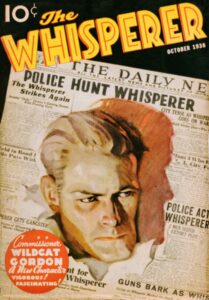
THE WHISPERER hit the newsstands with an October 1936 number. The Whisperer was police Inspector James “Wildcat” Gordon, who before the end of his first adventure (“The Dead Who Talked”) would be named police commissioner.
The 30-year-old, stocky, granite-jawed policeman tried to fight crime within the law during the day, but became The Whisperer to take the law into his own hands when it didn’t go far enough. The brash Wildcat Gordon favored equally brash — no, make that garish — suits, often green-checked with bright red ties, a matching carnation, a battered Army campaign hat, and large yellow shoes. The Whisperer was just the opposite.
Gordon’s crime-fighting alter ego was described as drab, homely, and unassuming. To transform into The Whisperer, Gordon put on a gray business suit, gray spats, and an old-fashioned round-brimmed hat; dusted his brownish/reddish hair with white powder; and inserted two dental plates that transformed his square jaw into a long, narrow, oddly pointed one. The dental plates also made him speak in a low but penetrating whisper; hence the name, The Whisperer. To mete out justice, The Whisperer packed two automatics fixed with super-silencers, which hissed and flashed licks of blue flame when fired. At other times, he took pleasure in snapping criminals’ necks with his exceptionally strong hands.
 If Police Commissioner James Gordon sounds familiar, you’re probably thinking of Police Commissioner James Gordon from BATMAN. That’s just one of several links between the comic book Caped Crusader and The Whisperer. Will Murray and Anthony Tollin address how THE WHISPERER and other pulps influenced BATMAN in Sanctum Books’ reprints of the pulp series.
When necessary, The Whisperer went undercover as D. Smith, or Dunk Smith, a two-bit crook who looked just like The Whisperer, but without the hat. He had to moderate his speech, keeping it hoarse and husky, to avoid giving himself away. Smith’s dog, a Scottish terrier named Brian Boru, answered only to The Whisperer or Dunk.
Gordon was joined in the magazine by Richard “Quick Trigger” Traeger and his granddaughter (later daughter) Tiny Traeger; his police chauffeur, Horace “Slug” Minor; Detective Sgt. Thorsen; and Judge Patrick Kyley. Thorns in Gordon’s side were Deputy Commissioner Henry Bolton, Gordon’s obnoxious assistant who desperately wanted Gordon’s job, and Van Royston, the foppish mayor who dressed in black tie, tails, and a silk top hat, and would have welcomed Bolton’s promotion.
Despite the hopped-up violence (at least by Street & Smith standards), The Whisperer rarely faced the sorts of villains The Spider confronted. The Whisperer tackled organized crime, racketeers, political corruption, and the like.
THE WHISPERER‘s first magazine ran for 14 issues, ending with the December 1937 number. Laurence Donovan wrote all the lead novels using the house name, Clifford Goodrich. After his namesake pulp folded, The Whisperer moved to short stories in the back pages of THE SHADOW MAGAZINE, with one appearance in CRIME BUSTERS, over the next three years. In 1938, Donovan fell out of favor with Street & Smith and was replaced by Alan Hathway as the new Clifford Goodrich.
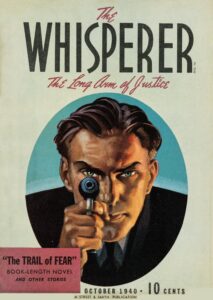
As the United States became embroiled in World War II, Street & Smith moved The Whisperer back to its own magazine. Restarting the numbering with Vol. 1, No. 1, dated October 1940, the series ran for another ten, every-other-month issues. The final issue was dated April 1942.
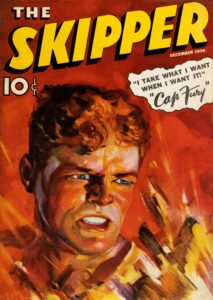 Two months after the first appearance of the original THE WHISPERER magazine, THE SKIPPER went on sale with a December 1936 cover date. Captain John Fury — the Skipper — was a variant of Doc Savage. Laurence Donovan, under the house name Wallace Brooker, also wrote Cap Fury’s adventures. The writer was quite familiar with Doc Savage, having penned nine of the Man of Bronze’s adventures from 1935 to 1937. Cap Fury wasn’t as tall as Doc Savage. He was stocky, with “flaming red hair” and “sharp arctic blue” eyes. He had Doc-like skills, including lip-reading, pressure-point techniques to subdue the bad guys, and cat-like agility. He also relied on oversized sea boots to conceal hypodermics, oxygen masks, and other gadgets. Unlike Doc, who refrained from killing, Cap Fury used his automatic pistols and a whip to mete out justice.
Fury sailed a rusted-looking old tanker, the “Whirlwind,” which was actually a state-of-the-art battleship, with deck guns, a fully outfitted laboratory, a hangar with foldable aircraft and a submarine, and elaborate living quarters.
Joining Fury in his adventures were Peter Doom, a former policeman and Fury’s closest associate; James Jonathan “Marlin Spike” Briggs, a Monk Mayfair-like first mate; Hurricane Dan Belmont, the giant second mate; Cock-eye, the third mate; and James “Bumps” McCarthy, who was constantly getting into jams. A “roly-poly, red-haired” fellow, Bumps was a newsreel cameraman who followed Fury around for great film. Princess Mara von Jean, the Black Leopard Princess, takes on the role of Pat Savage in the series, starting in the January 1937 issue. She turns up occasionally when she’s not at a Boston girls’ school. There’s also G.R.M. “Grump” Rollins, chairman of the board that owned the Whirlwind.
Again, echoing Doc Savage, Fury was drawn into his battle against evil after ocean-faring evildoers murdered his brother in his first adventure. Cap Fury vowed to rid the seas of pirates and criminals.
Unlike the routine bad guys The Whisperer fought, The Skipper battled fantastic foes with death rays, a meteorite that removed oxygen from the air, voodoo practitioners, plague-bearing rats, and other nefarious threats.
When THE SKIPPER was canceled after 12 issues with the December 1937 number, Cap Fury moved to the back pages of DOC SAVAGE MAGAZINE. Donovan, Harold Davis, and Norman Daniels wrote the shorter stories.
Beyond their pulp appearances, both The Whisperer and The Skipper appeared in backup stories in Street & Smith comic books in the 1940s.
At 9:10 PM on Thursday evening, July 21, Will Murray will begin PulpFest‘s much-admired programming with a discussion of “Street & Smith’s Second Stringers.”
After discovering Doc Savage in 1969, when he picked up the Bantam Books edition of DUST OF DEATH, Will Murray began to pen articles for THE DOC SAVAGE READER, ECHOES, THE PULP COLLECTOR, PULP VAULT, and other fanzines. One of the most respected authorities on pulp magazines, he still contributes to fanzines nearly fifty years later.
Murray also wrote about forty Destroyer action-adventure novels, nineteen Doc Savage novels, and a fully authorized Tarzan novel, RETURN TO PAL-UL-DON. A second is forthcoming. He also serves as literary agent for the Lester Dent estate and co-editor of Sanctum Books’ highly regarded pulp reprints. Will won the 1979 Lamont Award and regularly presents at PulpFest.
PulpFest 2016 will take place from July 21 through July 24 at the Hyatt Regency hotel and the city’s spacious convention center in the Columbus Arena District.
The Whisperer debuted with its October 1936 issue, featuring front cover art by the talented John Newton Howitt, a devoted landscape painter whose work sold in New York City fine art galleries. With the advent of the Great Depression, the artist turned to the pulps for income. An excellent painter, Howitt found a ready market in the rough-paper periodicals, selling freelance pulp covers to Adventure, Dime Detective, Horror Stories, The Spider, Terror Tales, Western Story Magazine, The Whisperer, and other pulp magazine titles.
Hubert Rogers, best known for Astounding Stories covers, painted all ten covers for The Whisperer, after its 1940 revival. A freelance artist, he produced covers for Ace-High, Adventure, Romance, and West. For Street & Smith, he contributed covers to Detective Story, Love Story, Sport Story, The Whisperer, The Wizard, and, as previously mentioned, Astounding Science Fiction.
The Skipper, including the first issue dated December 1936, featured cover art by Lawrence Donner Toney, a graduate of the Art Institute of Chicago. During the 1930s and 1940s, Toney painted covers for pulp magazines, such as Clues, Complete Stories, Western Story Magazine, and Wild West Weekly, all published by Street & Smith. He signed most of his pulp work only with his initials.
Traveling through Time with H. G. Wells—H. G. Wells was born on September 21, 1866. We’ll celebrate his sesquicentennial a few months after PulpFest 2016.
 Together with Jules Verne (1828-1905), Wells is a central pillar of what we call science fiction. Educated in the sciences and a literary genius, Herbert George Wells rose to prominence in the late nineteenth century. By the turn of the century, many considered him the world’s most important social thinker.
A multifaceted personality and prodigious talent, H. G. Wells wrote for the popular fiction magazines of his native England during “The Age of the Storytellers,” a period when increasingly urban and literate societies required cheap, entertaining, and easily accessible entertainment to escape the drudgery of the mills and offices. Writing for magazines such as THE STRAND and PEARSON’S MAGAZINE, H. G. Wells delivered countless scientific romances still enjoyed today. His classic novels “The War of the Worlds” and “The Invisible Man” were both published in PEARSON’S in 1897. His later science fiction, including “The First Men in the Moon” (1900-1901) and “The Country of the Blind” (1904), appeared in THE STRAND.
It would be difficult to deny Wells’ importance to the development of both science fiction and AMAZING STORIES. During his three years as editor and publisher of the first science-fiction magazine, Hugo Gernsback turned to Wells’ fictional output for nearly thirty stories, reprinting such tales as “The Country of the Blind,” “The Crystal Egg,” “The Empire of the Ants,” “The First Men in the Moon,” “The Invisible Man,” “The Island of Dr. Moreau,” “The Man Who Could Work Miracles,” “A Story of the Days to Come,” “The Time Machine,” “The Valley of the Spiders,” “The War of the Worlds,” and “When the Sleeper Wakes” in his flagship title and its companions.
At 10:05 PM on Thursday, July 21, please join PulpFest 2016 in the Union Rooms on the second floor of the Hyatt Regency in downtown Columbus, Ohio, for “Traveling through Time with H. G. Wells.” Professor Garyn G. Roberts will offer an illustrated presentation on Wells that surveys both the better-known and lesser-known achievements of his life, emphasizing and including his works reprinted in Gernsback’s AMAZING STORIES. Garyn will also explore the author’s many contributions to the early days of pulp magazine speculative fiction.
Garyn Roberts has written extensively about the pulps, both professionally and as a fan, and has edited or co-edited some of the best pulp fiction anthologies. He is the author/editor of the award-winning THE PRENTICE HALL ANTHOLOGY OF SCIENCE FICTION AND FANTASY. PulpFest presented Garyn with its Munsey Award in 2013 to honor his many contributions to the pulp community.
The summertime destination for fans and collectors of vintage popular fiction and related materials, PulpFest honors pulp fiction and art by highlighting the many ways both have inspired writers, artists, film directors, software developers, and other creators over the decades. The convention will take place from Thursday evening, July 21, through Sunday afternoon, July 24, at the Hyatt Regency hotel and the city’s spacious convention center in the Columbus Arena District. Start planning to join us at the “pop culture center of the universe” for PulpFest 2016.

Frank R. Paul, the “grandfather of science-fiction art,” painted the cover for the August 1927 issue of Amazing Stories, illustrating the first half of the classic novel, which the magazine serialized in two parts. PulpFest 2016 has used Paul’s cover art throughout the past year to promote our convention at bookstores, comic shops, and other conventions and fairs.
In 1951, film producer George Pal, screenwriter Barré Lyndon, and director Byron Haskin began producing a movie that would portray, as realistically as possible, the details of an alien invasion. Largely set in the United States and starring Gene Barry and Ann Robinson, Pal’s The War of the Worlds was released in 1953. Although the film now appears somewhat dated, it remains one of the best and most important science fiction movies of the 1950s. Unfortunately, the poster artist is not known.
Pulps in the Pub—why do we attend PulpFest? We can find pulps and other collectibles online. So it may seem foolish to travel hundreds or even thousands of miles to attend a convention dedicated to magazines most people know nothing about.
But PulpFest is more than a dealers’ room featuring tens of thousands of pulp magazines, vintage paperbacks, digests, men’s adventure and true crime magazines, original art, first edition hardcovers, series books, reference books, dime novels and story papers, Big Little Books, B-Movies, serials and related paper collectibles, old-time radio shows, and Golden and Silver Age comic books, as well as newspaper adventure strips. PulpFest is people — readers and collectors with a common interest in pulp fiction and pulp art. People who realize that the pulps had a profound effect on American popular culture.
Why do we attend PulpFest? According to collector Walker Martin: “They are a hell of a lot of fun! Not only do you get to roam around a gigantic dealer’s room full of books and pulps, but you get to meet and talk to some of the greatest collectors and dealers. These will lead to future deals and contacts. Plus, you can eat and drink with these guys!”
After our evening programming on Thursday, July 21, join PulpFest for a round or two at the Hyatt Regency Columbus pub. Buy a round for your table and talk about the magazines we love and collect:
“What’s your favorite Doc Savage adventure? How many people died in ‘Death Reign of the Vampire King?’ Did Joan Randall have a thing for Gragg the Robot? Remember when Conan bit off that vulture’s head in ‘A Witch Shall Be Born.’ How the hell do you say Tsathoggua? Why does the Phantom Detective wear a top hat? Who the hell is Pinky Jenkins?”
These are just some of the mysteries you might clear up with your pals – old and new – at PulpFest 2016 and the Hyatt Regency’s pub. You sure can’t do that on your iPhone!
Friday, July 22, 2016
The New Fictioneers—Friday afternoon programming was completely set aside for “New Fictioneers” readings. These featured contemporary writers reading from their recent works and fielding audience questions and comments. To learn more about PulpFest’s “New Fictioneers” readings, click here.
FarmerCon XI: Collaborating with Philip José Farmer—since 2011, PulpFest has hosted FarmerCon, a convention that began in Peoria, Illinois, Philip José Farmer’s hometown. Originally a gathering of Farmer fans figuratively, and literally, right outside Phil’s back door, FarmerCon offered presentations, dinners, and even picnics at the author’s house. Now, the annual gathering for the “Friends of Phil” takes place, for the most part, at PulpFest.
To most pulp enthusiasts, the late Philip José Farmer is best known as “A prolific and popular science fiction writer who shocked readers in the 1950s by depicting sex with aliens and challenged conventional pieties of the genre with caustic fables set on bizarre worlds of his own devising.” In science-fiction circles, Farmer is most remembered for his novels. Called “sprawling, episodic works that gave him room to explore the nuances of a provocative premise while indulging his taste for lurid, violent action,” his best were set in the Riverworld and World of the Tiers series. He was named a Grand Master of Science Fiction in 2001. To those who know and love him the best — the members of FarmerCon — Philip José Farmer is revered for his work concerning the Wold Newton Family.
Tonight, our FarmerCon XI members will discuss, “Collaborating with Philip José Farmer.” England’s Paul Spiteri, who served as co-editor of FARMERPHILE and the collection PEARLS FROM PEORIA, and also collaborated with Farmer, finishing the short story “Getting Ready to Write,” will be moderating the panel. Joining Paul will be authors Danny Adams, Christopher Paul Carey, and Win Scott Eckert.
 Danny Adams collaborated with Phil on the short novel THE CITY BEYOND PLAY (PS Publishing, 2007) and has also just completed A HOLE IN WEDNESDAY, a work that Farmer began before he wrote the three novels DAYWORLD, DAYWORLD REBEL, and DAYWORLD BREAKUP. The latest Adams/Farmer collaboration will debut at PulpFest in July. Farmer’s Dayworld series imagines a severely overcrowded future that cures the overpopulation problem by “stoning” most of the population each day.
Christopher Paul Carey collaborated with Farmer on the novel THE SONG OF KWASIN, the third climactic volume in the Ancient Opar/Khokarsa series. He has continued the series with the prequel novella EXILES OF KHO, and the novellas HADON, KING OF OPAR and BLOOD OF ANCIENT OPAR. The latter will also be debuting at PulpFest in July.
Win Scott Eckert edited the anthology MYTHS FOR THE MODERN AGE: PHILIP JOSÉ FARMER’S WOLD NEWTON UNIVERSE and collaborated with Phil on THE EVIL IN PEMBERLEY HOUSE, the novel that introduced adventuress Patricia Wildman. He has continued the Pat Wildman series with the novella THE SCARLET JAGUAR, and will be finishing another incomplete Farmer manuscript, THE MONSTER ON HOLD, which will almost certainly debut at a future PulpFest. The latter features Philip José Farmer’s celebrated character, Doc Caliban.
To learn more about Philip José Farmer, please visit The Official Philip José Farmer Web Page. It’s the Brobdingnagian collection of all things Farmerian!
Dayworld: A Hole in Wednesday is a prequel to Philip José Farmer’s Dayworld trilogy, which explores an overcrowded future that cures the problem by “stoning” six-sevenths of the population each day. Set between the events of the classic short story “The Sliced-Crosswise Only-On-Tuesday World” and the three Dayworld novels, the Farmer/Danny Adams collaboration – with cover art by Keith Howell – will debut at PulpFest 2016/FarmerCon XI.
The Artists Who Made Argosy—on Friday, July 23, at 7:50 PM, one of PulpFest‘s most popular presenters, artist and art historian David Saunders, returns to our programming stage in the Union Rooms on the second floor of the Hyatt Regency Columbus for a look at “The Artists Who Made ARGOSY.”
Publisher Frank A. Munsey founded the first all-fiction pulp magazine, THE ARGOSY, as a children’s weekly in 1882. Originally titled THE GOLDEN ARGOSY, it was converted to a general fiction pulp magazine with its December 1896 number. Within ten years, it sold half a million copies of each issue. Through numerous title and format changes, as well as editorial and publisher shifts, the magazine soldiered on for nearly a century, with its final issue dated November 1979. As a pulp, it lasted for over 1500 issues and nearly fifty years. After its August 1943 issue, it switched to a slick format, reduced its fiction content, and eventually became a men’s adventure magazine.
 Today, ARGOSY is sought after for its authors and its series characters. H. Bedford-Jones, Max Brand (Frederick Faust), Edgar Rice Burroughs, Ellis Parker Butler, Borden Chase, Walt Coburn, Ray Cummings, Norbert Davis, Lester Dent, Ralph Milne Farley, C. S. Forester, Erle Stanley Gardner, Zane Grey, L. Patrick Greene, O. Henry, Robert E. Howard, L. Ron Hubbard, Otis Adelbert Kline, Harold Lamb, Murray Leinster, Gordon MacCreagh, Johnston McCulley, Fred MacIsaac, A. Merritt, Clarence E. Mulford, Hugh Pendexter, Mary Roberts Rinehart, Theodore Roscoe, Charles Alden Seltzer, Perley Poore Sheehan, Upton Sinclair, Francis Stevens, W. C. Tuttle, W. Wirt, Cornell Woolrich, George F. Worts, and countless other talented writers found a home in its rough-paper pages.
Popular series characters featured in ARGOSY included Captain Horatio Hornblower, Carson Napier, Dr. Kildare, Gillian Hazeltine, Hopalong Cassiday, Jan of the Jungle, Jimmie Cordie, John Carter, John Solomon, Madame Storey, Montana Kid, Peter the Brazen, Semi-Dual, Sheriff Henry, Singapore Sammy, Tarzan, Thibaut Corday, Zorro, and many others.
But what about the days when hundreds of thousands of men, women, and children read ARGOSY? Although a favorite writer or character was enough to convince a regular ARGOSY reader to part with his or her hard-earned money at the newsstand, a pulp magazine’s artwork often drew in new or casual readers. Like every great pulp magazine, ARGOSY employed some of the best artists in the business: Rudolph Belarski, Ernest Chiriacka, Rafael M. DeSoto, Charles Dye, Marshall Frantz, Robert A. Graef, P. J. Monahan, Roger B. Morrison, Stockton Mulford, John R. Neill, Clinton Pettee, Norman Rockwell, Norman Saunders, Fred W. Small, Paul Stahr, Peter Stevens, Emmett Watson, and others.
Join David Saunders at PulpFest 2016 for a survey of ARGOSY covers and story illustrations, plus rarely seen original cover paintings and drawings, as well as rare photographs of many of the “Artists Who Make ARGOSY,” part of this year’s celebration of the 120th anniversary of the first pulp magazine — THE ARGOSY.
Born in 1954, David Saunders is a New York artist. His work has been collected worldwide and is on view at the Museum of Modern Art, The Metropolitan Museum of Art, The Brooklyn Museum of Art, and the Hirshhorn Museum of Art in Washington, DC. He has taught art at Yale, Oberlin, and the Kansas City Art Institute, as well as art schools in France, Korea, Mexico, and Japan.
David’s father was the legendary illustrator, Norman Saunders. His mother, Ellene Politis Saunders, worked at Fawcett Publications as Chief Executive Editor for WOMAN’S DAY. In 1972, David became his father’s business secretary, which started a long project to catalog his father’s 7,000 published illustrations. He spent the next seventeen years gathering published examples of his father’s work from used bookshops and submitting each new entry to his father’s inspection. What began as a sentimental hobby for a father and son grew into an impressive archive of 20th-century American illustration. After his father’s death in 1989, David completed the archive himself. He interviewed his father’s surviving associates to record their oral histories. These transcripts helped broaden his view of the popular culture publishing industry and documented vital information about the lives of other artists. Some of this material has been published as biographical profiles in ILLUSTRATION MAGAZINE and several coffee-table art books on pulp artists.
 David is probably the foremost scholar of American pulp illustrators. His free public website, Field Guide to Wild American Pulp Artists, includes over 300 biographical profiles of these creators of popular culture. David continues to research, document, and promote a greater appreciation of pulp artists. To learn more, visit davidsaunders.biz, normansaunders.com, and theillustratedpress.com.
After checking out David’s credentials, be sure to attend “Summer’s AMAZING Pulp Con” as we salute the 120th anniversary of the birth of the pulp magazine from July 21 through July 24 at the Hyatt Regency hotel and the city’s spacious convention center in the Columbus Arena District. “You’ll be in for a great adventure” at PulpFest, the pop culture center of the universe.
Over its years as a pulp and later a men’s adventure magazine, Argosy was the full package: good authors, good stories, and good art.
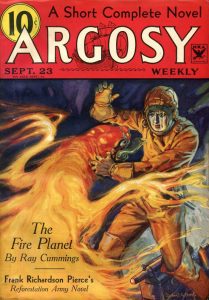
Robert A. Graef studied art at the Pratt Institute of Brooklyn. Soon after graduation, he began illustrating for a variety of magazines and newspapers. During the First World War, he contributed patriotic recruitment posters to the war effort. He added pulp magazines to his markets during the mid-twenties, most notably Argosy – including the September 23, 1933 number. Over the years, he contributed a great deal of art to Munsey’s magazines and other pulps.
In its early years as a slick magazine, Argosy continued to use painted covers, including the March 1947 number with cover art by Charles Dye. The artist contributed many interior story illustrations and covers to Popular Publications’ western pulp magazines as well as Adventure and Argosy. He later contributed the same to the men’s adventure market.
Good authors, good stories, and good art made Argosy a great magazine. It remains popular more than a century after its pulp debut.
Amazing: The First Science-Fiction Pulp—it was hard to miss the first issue of Amazing Stories on the newsstand. Letter-sized and larger than the typical pulp magazine, with three-dimensional block letters trailing across its masthead and a bright yellow backdrop framing an alien landscape, a bright red, ringed planet, and a small moon, the magazine certainly stood out on the sales rack. Frank R. Paul was the artist.
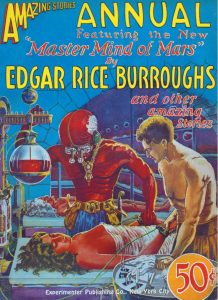 Within months, the new specialty magazine was selling over 100,000 copies of each issue. By establishing the first specialized science-fiction magazine, Gernsback tapped a vein of wonder shared by lonely individuals prone to “imaginative flights of fancy.” Next would come Amazing Stories Annual, published in the summer of 1927 and featuring Edgar Rice Burroughs’ The Mastermind of Mars. Amazing Stories Quarterly followed in the winter of 1928. Then, in the August 1928 number of Amazing Stories, Gernsback introduced his readers to E. E. “Doc” Smith’s “The Skylark of Space” and Philip Francis Nowlan’s “Armageddon—2419 AD,” the first tale to feature Buck Rogers. These two “space operas” would color science fiction for well over a decade, turning it into “that crazy Buck Rogers stuff.”
None of the penny dreadfuls, dime novels, or pulp magazines published from the turn to the middle of the twentieth century were created in isolation. A great, sometimes troubling, world buzzed around the butcher, the baker, the cop, the bobby-soxer, the factory worker, the Gibson girl, and the kid as they flipped a coin on the counter, left the newsstand, and walked home with a copy of magic in their hands.
The magazine that transmogrified scientifiction into science fiction was certainly true to its name: AMAZING STORIES. Through war, police actions, political upheaval; through reprints and originals; through a remarkable set of editors, AMAZING persevered into the twenty-first century.
Join PulpFest 2016 at 8:45 PM on Friday, July 22, as we welcome Joseph Coluccio, president of the Pittsburgh Area Fantasy and Science Fiction Club, to our programming stage in the Union Rooms on the second floor of the Hyatt Regency Columbus for a look at AMAZING STORIES during the pulp era.
It is Mr. Coluccio’s intention to consider the history – to about mid-century – of the content found in the pages of AMAZING STORIES, not in the context of the world at large, but in comparison to the rich popular culture of the time – science, radio, film art, and literature – that surrounded and influenced the magazine. Cover art, words, and anecdotes are all that are left of those early, amazing years. Through a series of sometimes exciting, sometimes disastrous editorial decisions, AMAZING STORIES reflected changes right back into the flowing current of everyday taste. Relive those times through the words of Hugo Gernsback, T. O’Connor Sloane, Raymond A. Palmer and Howard Browne, brought to you by PARSEC‘s Joseph Coluccio.
Frank R. Paul painted the cover for the first issue of Amazing Stories, dated April 1926, and the 1927 Amazing Stories Annual, illustrating Edgar Rice Burroughs’ The Mastermind of Mars. The artist is widely considered the grandfather of science fiction art.
Love Story Magazine and its Romantic Sisters—Although the Munsey group published the first specialized pulp magazines — beginning with THE RAILROAD MAN’S MAGAZINE in 1906, followed by THE OCEAN in 1907 — both pulps were a mixture of fact and fiction. It would be up to Street & Smith to originate the specialized pulp-fiction magazine in the fall of 1915 when it introduced DETECTIVE STORY MAGAZINE to the reading public.
Originally published twice a month, DETECTIVE STORY went weekly before the end of its second year. Despite its great success, the new pulp did not immediately inspire many imitators. Street & Smith had to develop the trend itself. WESTERN STORY MAGAZINE arrived in 1919, followed by LOVE STORY in 1921, SEA STORIES in 1922, and SPORT STORY MAGAZINE in 1923. Single-genre fiction pulps didn’t take off until 1924, when other publishers released their own specialty pulps. Many more specialty pulps would follow in the ensuing years, culminating in single-character magazines such as THE SHADOW and DOC SAVAGE MAGAZINE.
 When Street & Smith’s LOVE STORY MAGAZINE was launched in 1921, the pulp fiction magazine industry was changed forever. During the Roaring Twenties, LOVE STORY’s circulation grew to 600,000 in the early 1930s, a record no other pulp magazine would ever break. The romance genre, along with the western, would become the best-selling pulp fiction genres through the Depression and World War II. At one point or another, almost every pulp publisher would try to break into the “love pulp” field. Some attempts succeeded; others faded after a few issues. And never would they be able to topple the circulation record set by LOVE STORY MAGAZINE.
On Friday, July 22, at 9:40 PM in the Union Rooms on the second floor of the Hyatt Regency, Laurie Powers will discuss “LOVE STORY MAGAZINE and the Romance Pulp Phenomenon.” She will explore the magazine, its famous editor Daisy Bacon, and the romance pulps that followed in its footsteps. With many rare photos and artifacts, Laurie will explain how LOVE STORY began, what made it so popular, and how Daisy Bacon influenced its success. In addition, she will discuss LOVE STORY’s competition, including the long-running ALL-STORY LOVE STORIES – a pulp that was managed by LOVE STORY’s original editor and Daisy’s rival, Amita Fairgrieve – and the longest-running pulp fiction magazine, RANCH ROMANCES, a pulp that would spearhead a brand new genre, the romance western.
Laurie Power’s interest in pulp fiction began in 1999 when she discovered that her paternal grandfather, Paul S. Powers, (1905–1971), had been a successful writer of stories that appeared in magazines such as REAL DETECTIVE TALES, WEIRD TALES, WESTERN STORY MAGAZINE, WILD WEST WEEKLY, and many other pulps. During her research, she discovered her grandfather’s unpublished manuscript, PULP WRITER: TWENTY YEARS IN THE AMERICAN GRUB STREET. The University of Nebraska published it in 2007. Since then, Laurie has been very active in the community of pulp magazine historians and collectors. In recent years, she has been writing a biography of Daisy Bacon, editor of LOVE STORY MAGAZINE.
Modest Stein began contributing covers to the pulp market in 1910, selling to both the Munsey and Street & Smith chains. By the twenties, he was largely employed by the latter, painting covers for Astounding Science Fiction, Clues, Crime Busters, Doc Savage, Far West Illustrated, Love Story Magazine – including the October 30, 1937 issue, our featured image – Romantic Range, The Shadow, Unknown, and other Street & Smith titles. Following the publisher’s 1949 exit from the pulp field, Stein worked predominantly as a portrait artist. He died in 1958.
Western Story Magazine and the Evolution of the Pulp Western—the western genre began with James Fenimore Cooper’s Leatherstocking Tales, a fictional adaptation of frontiersman Daniel Boone’s adventures. In the years following Cooper’s Natty Bumppo series, authors such as Bret Harte, Francis Parkman, and Mark Twain further expanded the field.
 According to an essay by pulp scribe John A. Saxon, published in 1945 by WRITER’S DIGEST, the western story became a genre of its own during the second half of the 19th century. In 1869, writer Edward Zane Carroll Judson convinced hunter, scout, and showman William F. Cody to lend his name and reputation to a fictionalized account of his life, “Buffalo Bill, King of the Borderman,” originally serialized in Street & Smith’s NEW YORK WEEKLY. Phenomenally received, Judson found a public hungry for further adventures of the real-life hero of the American frontier. Thus started “. . . the fictionalized form of the Western story . . . based partly on fact, but mostly on imagination.”
Given the great success of Street & Smith’s Buffalo Bill tales, nickel weeklies and dime novels devoted to western heroes and outlaws soon followed: DEADWOOD DICK LIBRARY, DIAMOND DICK LIBRARY, JAMES BOYS WEEKLY, KLONDIKE KIT LIBRARY, WILD WEST WEEKLY, and more. Dime novel westerns and stories featuring detective heroes such as Nick Carter and Old Sleuth and sports heroes such as Frank Merriwell reigned supreme for nearly forty years. Then, after Frank A. Munsey introduced the pulp magazine in 1896, story papers and dime novels gave way to these more economical, rough-paper periodicals.
The first all-western pulp magazine was introduced by Street & Smith when they converted their tired old story paper, NEW BUFFALO BILL WEEKLY, to WESTERN STORY MAGAZINEin 1919. Within a year, the magazine reached a circulation of 300,000 copies per issue and became a weekly, a status it enjoyed for the next twenty-five years. Soon thereafter, the magazine began publishing the western fantasies of poet-turned-pulp writer Frederick Schiller Faust – better known as Max Brand – and really took off. By the late 1920s, WESTERN STORY was competing against countless imitators – ACE-HIGH, COWBOY STORIES, FRONTIER, GOLDEN WEST, LARIAT, NORTH-WEST STORIES, RANCH ROMANCES, WEST, and others.
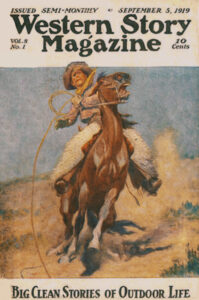 Street & Smith’s WESTERN STORY MAGAZINE lasted for thirty years and nearly 1300 issues. When it launched in 1919, it changed the pulp fiction magazine industry forever. At its peak, it was released weekly and sold 500,000 copies of each issue. Like its predecessor in the specialty pulp market – DETECTIVE STORY MAGAZINE – it inspired a host of imitators and advanced the western genre, helping the pulps to survive the Great Depression and the Second World War.
At 10:30 PM on Friday, July 22, please join noted popular culture historian Will Murray at PulpFest‘s programming stage in the Union Rooms on the second floor of the Hyatt Regency Columbus for an examination of “WESTERN STORY MAGAZINE and the Evolution of the Pulp Western,” part of our celebration of “A Century of the Specialty Pulp.”
Will Murray has researched and written about the pulps for nearly half a century. One of the most respected authorities on the pulp magazine, having authored countless articles and books, including WORDSLINGERS: AN EPITAPH FOR THE WESTERN, Murray was the ghostwriter for about forty of the Destroyer action-adventure novels. He has also written nineteen Doc Savage novels and a fully authorized Tarzan novel, RETURN TO PAL-UL-DON. A second is forthcoming.
 Start planning to attend “Summer’s AMAZING Pulp Con” as we salute 100 years of the specialty pulp from July 21 through July 24 at the Hyatt Regency Hotel and the city’s spacious convention center in the Columbus Arena District. You’ll have a rootin’-tootin’ time at the pop culture center of the universe.
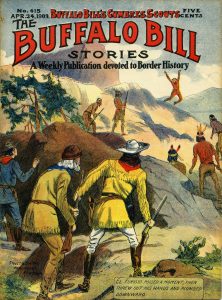
The Buffalo Bill Stories was the first publication devoted to fiction about frontiersman William F. Cody. A weekly publication “devoted to border history,” it debuted with its May 18, 1901 number and was published by Street & Smith. Our lead image is the April 24, 1909 issue. Most covers for Street & Smith periodicals published in the early 1900s were drawn by Charles L. Wrenn, Marmaduke Russell, Ed. Johnson, and J. A. Cahill.
The work of Stanley L. Wood – an English illustrator noted for his paintings featuring horses in action, often paired with boys’ adventure stories – was used as the cover art for the first issue of Western Story Magazine, dated September 5, 1919. Later issues of the rough paper magazine – including the December 12, 1931 number – featured covers by the “King of the Pulps,” Walter M. Baumhofer, who is best remembered for his Doc Savage Magazine covers.
To learn more about the evolution of the pulp western, read John Dinan’s The Pulp Western, Ron Goulart’s Cheap Thrills, and Will Murray’s Wordslingers.
Gaming at PulpFest 2016—PulpFest was founded on the premise that the pulps profoundly shaped American popular culture, reverberating through a wide variety of media—comic books, movies, paperbacks and genre fiction, television, men’s adventure magazines, radio drama, and even video and role-playing games. The summertime destination for fans and collectors of vintage popular fiction, art, and related materials, PulpFest seeks to honor the pulps by highlighting the many ways such magazines have inspired writers, artists, film directors, software developers, and other creators over the decades.
Science fiction has likewise played a strong role in the development of American popular culture. Introduced to pulp readers through the scientific romances found in the Munsey magazines and other general fiction pulps, science fiction became its own genre when Hugo Gernsback premiered AMAZING STORIES – the first continuing science fiction magazine – in the spring of 1926. AMAZING and the pulps that followed it – WONDER STORIES, ASTOUNDING STORIES, STARTLING STORIES, among others – served to inspire the worlds of STAR TREK, STAR WARS, BABYLON 5, Steampunk, and other expressions of contemporary popular culture, including role-playing games and board games.
PulpFest introduced a gaming track to its programming schedule in 2015. Many themes in modern games echo the pulps and stories published in those magazines. Games are based on Conan, the Cthulhu Mythos, space operas such as Doc Smith’s Lensman series, westerns, mysteries, and, of course, pulp heroes.
This year, in honor of the ninetieth anniversary of the debut of AMAZING STORIES, PulpFest will have an array of role-playing games and board games set in the science fiction genre. Players can explore other worlds and adventure in outer space.
We will have two tables running Pathfinder RPG games. Although these games have a fantasy setting, the Pathfinder world we’ll be exploring feels the impact of science fiction. Expect aliens with blasters and dimensional gates, as well as orcs and dragons. The Columbus chapter of the Ohio Pathfinder Society will be managing our Pathfinder games.
Ohio’s Rogue Cthulhu group will run Cthulhu Mythos adventures set in modern times and the future. Stride across alien worlds and face eldritch horrors, fly in starships to battle alien races such as the Mi-Go, and stand against entities from other worlds using science. The mythos developed in the pulps by H. P. Lovecraft and other writers – Robert Bloch, Robert E. Howard, Henry Kuttner, Frank Belknap Long, and so on – has inspired a wide range of both role-playing and board games. Rogue Cthulhu will manage a variety of games to thrill and entertain.
The Fellowship of the White Star will run role-playing games at two tables. The Fellowship’s adventures are set on Earth in the early twentieth century. Intrepid adventurers battle everything from mad scientists trying to conquer the world to invading aliens to creatures of darkness. Join them as they strive to keep their families and countries safe from dark science.
PulpFest 2016 will also feature several board games. One table will run and teach several games that can be played in an hour or two. We’ll have ALIEN FRONTIERS, CHRONONAUTS, DESTINATION NEPTUNE, INFINITE CITY, MEGAMANIOLOGY, and others. By popular demand, another table will be running ELDRITCH HORROR, a board game featuring a band of investigators battling entities from the Cthulhu Mythos.
Come to PulpFest 2016 to explore our substantial dealers’ room and find exciting pulp fiction and books to read. Then stop by our game room to save Earth from aliens, explore new planets circling far-flung stars, or seek out ancient artifacts and knowledge. You’ll learn how to play a variety of new games and “boldly go where no man has gone before.”
“Summer’s AMAZING Pulp Con” runs from July 21 through July 24 at the Hyatt Regency Hotel and the city’s spacious convention center in the Columbus Arena District. You’ll have a rootin’-tootin’ time at the pop culture center of the universe.
The PulpFest 2016 gaming track will begin at 10 AM on Saturday, July 23, and last until 10 PM or thereabouts. All games will take place in the Clark Room, located on the second floor of the Hyatt Regency. Watch for the PulpFest “PLAY banner” outside the entrance to our game room. Eight tables will be set up, featuring a variety of board games, card games, and role-playing games. PulpFest is also working with several gaming companies to provide prizes for participating members.
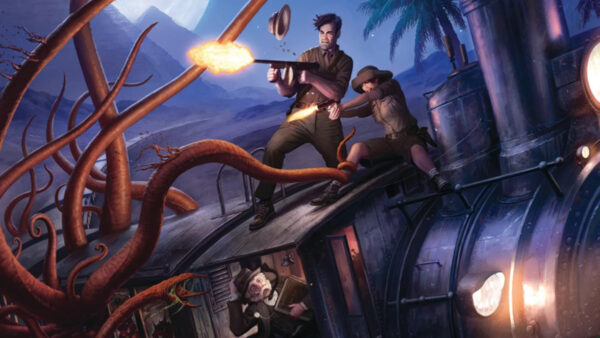
Anders Finér created the box art for Eldritch Horror, a game developed by designers Corey Konieczka and Nikki Valens and published by Fantasy Flight Games. It’s our featured image.
Saturday, July 23, 2016
The New Fictioneers—our Saturday afternoon programming began with one of our “New Fictioneers” readings. It featured a contemporary writer reading from his recent work and fielding audience questions and comments. To learn more about PulpFest’s “New Fictioneers” readings, click here. Additionally, there were two presentations.
Writing the New Pulp Hero—one of PulpFest‘s hallmarks has been its willingness to seek out and try new ideas. This was clear in its 2009 decision to present readings by “The New Fictioneers,” contemporary authors whose fiction is inspired by a love of the pulps. Since then, several other conventions have added a “New Pulp” track to their programming schedules.
PulpFest‘s dedication to new ideas and “New Pulp” continues with its annual panel moderated by Ron Fortier, a professional writer for over forty-five years. In 2007, Ron teamed up with illustrator Rob Davis to start Airship 27 Productions and built a home for new adventures featuring many of the pulp characters our community still remembers. Ron’s own creation, the undead avenger known as Brother Bones, would certainly have been at home with Paul Ernst’s Doctor Satan in the pages of WEIRD TALES and Norvell Page’s The Spider. Ron has also penned the adventures of pulp heroes Captain Hazzard and the Domino Lady, as well as pop culture icons The Green Hornet and The Phantom.
In recent posts on this page, we’ve delved into the world of the specialty pulp, one of the themes of this year’s PulpFest. The first of these – Street & Smith’s DETECTIVE STORY MAGAZINE – premiered with its October 5, 1915 issue. The first pulp magazine successfully dedicated to one fiction genre; its success led to a proliferation of pulp magazines devoted to a single theme or genre, eventually culminating in the single-character pulp or hero pulp. For our 2016 “New Pulp” panel, Fortier has set his sights on the topic, “Writing the Pulp Hero.” He’ll be joined by four of the leading practitioners of contemporary pulp fiction.
Barbara Doran is a science fiction, fantasy, and mystery writer. Her father introduced her to the work of S. J. Perelman and P. G. Wodehouse, as well as Robert A. Heinlein and Isaac Asimov. Her earliest influences however, were pulp heroes such as Doc Savage and The Shadow. Another influence was The Green Hornet and Kato. These characters inspired Barbara’s first published work, CLAWS OF THE GOLDEN DRAGON, released in 2015 by Airship 27. Most recently, Barbara penned an adventure of Sinbad the Sailor for the fifth volume of Airship’s SINBAD — THE NEW ADVENTURES.
 One of the founding members of the “New Pulp” movement, Win Scott Eckert is co-author (with Philip José Farmer) of the Wold Newton novel THE EVIL IN PEMBERLEY HOUSE, concerning the daughter of a certain bronze-skinned pulp hero, and its sequel, THE SCARLET JAGUAR. Win also edited and contributed to MYTHS FOR THE MODERN AGE: PHILIP JOSÉ FARMER’S WOLD NEWTON UNIVERSE, nominated for a Locus Award in 2007, and wrote the critically acclaimed CROSSOVERS: A SECRET CHRONOLOGY OF THE WORLD, published by Black Coat Press. He has also written tales featuring many adventure and pulp hero characters, including The Avenger, Captain Midnight, The Green Hornet, Honey West, The Scarlet Pimpernel, Sherlock Holmes, and Zorro. Win is currently finishing another incomplete Farmer manuscript, THE MONSTER ON HOLD, which will almost certainly debut at a future PulpFest. The latter features Philip José Farmer’s celebrated character, Doc Caliban.
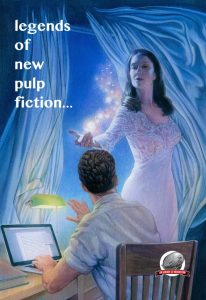
Nominated for a Pulp Ark New Pulp Award as the 2016 “Best New Writer,” Andy Fix has appeared in several anthologies of “New Pulp” fiction. His story, “Face to Face with Agent Loki,” appeared in the fifth volume of Airship 27’s celebrated SECRET AGENT X series. Andy also contributed a tale to LEGENDS OF NEW PULP FICTION, an all-new anthology to benefit new pulp publisher, editor, and writer Tommy Hancock, recently diagnosed with congestive heart failure. Andy is currently working on an air war story for Airship 27 and is featured on the Global Adventure Society Pulpcast, which “covers all aspects of Pulp Culture.”
Like Andy Fix, Jeff Fournier contributed to LEGENDS OF NEW PULP FICTION and is featured on the Global Adventure Society Pulpcast. And like Barbara Doran, Jeff has penned an adventure of Sinbad the Sailor. It appeared in the fourth volume of Airship’s SINBAD — THE NEW ADVENTURES.
Our “Writing the New Pulp Hero” panel will take place at 2 PM on Saturday, July 23, in the Union Rooms on the second floor of the Hyatt Regency Columbus. Watch for the PulpFest PANELS banner outside the entrance to our programming room. PulpFest 2016 – the destination for fans and collectors of vintage popular fiction, art and related materials – will begin on Thursday, July 21, and run through Sunday, July 24. Join us at the Hyatt Regency Columbus and the Greater Columbus Convention Center for “Summer’s AMAZING Pulp Con!” You’ll have a FANTASTIC time.
If you’re wondering about the term “fictioneer,” most dictionaries trace its origin to the early 1900s. However, it was relatively commonplace in magazines between 1910 and 1920 and has been spotted in works dating back to the mid-nineteenth century. To learn more about this term, click here.
Legends of New Pulp Fiction, an all-new anthology to benefit new pulp publisher, editor, and writer Tommy Hancock, features front cover art by Douglas C. Klauba.
Ten Years in The Shadow’s Sanctum—Anthony Tollin, the publisher of Sanctum Books, has long supported PulpFest. On Saturday, July 23, at 3 PM, PulpFest 2016 will celebrate Sanctum Books’ tenth anniversary. Our salute will take place in our programming area in the Union Rooms on the second floor of the Hyatt Regency Columbus.
 Anthony Tollin launched the Sanctum double-novel pulp reprints in July 2006. During the past decade, Sanctum has reprinted all 182 DOC SAVAGE pulp novels, all 24 of Paul Ernst’s AVENGER novels, the 14 WHISPERER novels from the first pulp series, and more than 220 SHADOW novels — all in non-flaking editions with the classic color covers and original interior illustrations, plus comprehensive historical articles and features. These features have included rare radio scripts and reprints of Street & Smith comic book stories, such as the Iron Munro yarns of Theodore Sturgeon.
Additionally, Sanctum Books has reprinted selected NICK CARTER, PHANTOM DETECTIVE, and THE SKIPPER adventures in the double-novel format, and has added THE SPIDER and THE BLACK BAT to its publishing schedule.
All this means that Sanctum Books has been one of the leading pulp reprint houses for the last ten years.
Please join Anthony Tollin and his contributing editor Will Murray as they recall Sanctum’s first decade, preview its new anniversary special and annuals, and showcase some of its upcoming projects — including a hardcover collection of the complete 1940-1942 SHADOW newspaper strips.
The only way to join this celebration of “Ten Years in The Shadow’s Sanctum” is to attend PulpFest 2016, “Summer’s AMAZING Pulp Con.” Find out “Who knows what evil lurks in the hearts of men?” only at PulpFest. It takes place July 21 through July 24 at the Hyatt Regency Hotel and the city’s spacious convention center in the Columbus Arena District.
Back in 2006, the advertising copy for the first of Sanctum Books’ double novel reprints read:
“The Shadow returns in two of his greatest pulp adventures: ‘Crime, Insured”‘ (acclaimed as Walter Gibson’s greatest thriller) and ‘The Golden Vulture’ (revised by Gibson from Lester Dent’s 1932 tryout novel that won him the Doc Savage contract), featuring writers Walter B. Gibson and Lester Dent (writing as “Maxwell Grant”), and artists George Rozen and Edd Cartier. The first volume of this new series reproduces both original covers by George Rozen, plus all of the original interior illustrations by Edd Cartier. This book also includes new historical background articles by popular culture historians Anthony Tollin and Will Murray (who collaborated with Dent on seven new Doc Savage novels previously published by Bantam).”
Over the past ten years, Sanctum’s format has not changed: each volume features two or three novels, the original covers and interior illustrations, and historical articles or other materials. They’re a tremendous value and belong in every pulp fan’s library!
Evening Presentations
The 2016 Munsey Award—Laurie Powers has won the 2016 Munsey Award. Nominated by the pulp community, Laurie was selected by a vote of all living Lamont, Munsey, and Rusty Award winners. The award is a fine art print of a David Saunders painting, published by Dan Zimmer, and is presented annually to someone who has worked to better the pulp community. J. Barry Traylor, the recipient of the 2014 Rusty Award, presented Laurie with her well-deserved Munsey.
 The granddaughter of pulp author Paul S. Powers, Laurie was introduced to the pulp community in 2007 through the publication of PULP WRITER: TWENTY YEARS IN THE AMERICAN GRUB STREET, an autobiography and appreciation of her grandfather. She has also edited several collections of her grandfather’s work across genres, releasing several previously unpublished stories. In 2013, she helped to arrange the donation of her grandfather’s personal papers and more than 400 pulp magazines featuring his work to the Rare Books and Manuscripts Library at Ohio State University in Columbus. She also publishes Laurie’s Wild West, an Internet blog site that has become a favorite destination for those interested in the pulps. Laurie has published articles on “Who Read the Pulps?,” female pulp writers, a series of articles put together by various pulp fans entitled “My Favorite Pulps,” and many other topics.
Although relatively new to the world of pulps, Laurie has shown tremendous support for the community by spreading the word about pulp fiction and publicizing the conventions that salute our wonderful hobby. She is currently working on a biography of pulp editor Daisy Bacon, editor of LOVE STORY MAGAZINE. At this year’s PulpFest, she presented “100 Years of the Specialty Pulp — LOVE STORY MAGAZINE and the Romance Pulp Phenomenon” during our evening programming on Thursday, July 22.
The other nominees for the 2016 Munsey Award included Camille Cazedessus, Ron Fortier, Joel Frieman, Chris Kalb, William Lampkin, Phil Stephensen-Payne, George Vanderburgh, Howard Wright, and Dan Zimmer. Andrew Nette – who posts about vintage paperbacks on Facebook – also received a single nomination.
In a surprise announcement, David Saunders received a special “retro” Lamont Award recognizing his substantial service to the pulp community over the years. Since a limited edition of thirty-six numbered and signed prints – designed and created by David – serves as the Munsey and Rusty awards, it was decided to honor David’s significant contributions to the pulp world with one of the few remaining copies of Pulpcon‘s Lamont Award. Our 2015 Munsey Award winner, Stephen T. Miller, presented the 2016 Lamont.
Born in 1954, David Saunders is a New York artist. His work has been collected worldwide and is in the Museum of Modern Art, The Metropolitan Museum of Art, The Brooklyn Museum of Art, and the Hirshhorn Museum of Art in Washington, DC. He has taught art at Yale, Oberlin, and the Kansas City Art Institute, as well as art schools in France, Korea, Mexico, and Japan.
David’s father was the legendary illustrator, Norman Saunders. His mother, Ellene Politis Saunders, worked at Fawcett Publications as Chief Executive Editor for WOMAN’S DAY. In 1972, David became his father’s business secretary, which started a long project to catalog his father’s 7,000 published illustrations. He spent the next seventeen years gathering published examples of his father’s work from used bookshops and submitting each new entry to his father’s inspection. What began as a sentimental hobby for a father and son grew into an impressive archive of 20th-century American illustration.
After his father’s death in 1989, David completed the archive himself. He interviewed his father’s surviving associates to record their oral histories. These transcripts broadened his view of the popular culture publishing industry and documented vital information about the lives of other artists. Some of this material has been published as biographical profiles in ILLUSTRATION MAGAZINE and several coffee-table art books on pulp artists.
David is the leading scholar of American pulp illustrators. His free public website, Field Guide to Wild American Pulp Artists, includes over 300 biographical profiles of these popular-culture creators. David continues to research, document, and promote a greater appreciation of pulp artists. To find out more, please visit davidsaunders.biz, normansaunders.com, and theillustratedpress.com.
Ted White and Amazing Stories—in the spring of 1926, publisher Hugo Gernsback introduced AMAZING STORIES, the first continuing science fiction magazine. Within months, the new specialty magazine was selling over 100,000 copies per issue. Gernsback had tapped a vein of wonder, shared by lonely individuals prone to “imaginative flights of fancy.”
Although Gernsback lost control of his magazine in 1929, founding AMAZING STORIES signaled the separation of science fiction into its own category. Before long, AMAZING was joined by other science fiction pulps, including Gernsback’s own WONDER STORIES and Clayton’s ASTOUNDING STORIES OF SUPER-SCIENCE. It was in the latter magazine – retitled ASTOUNDING SCIENCE FICTION – that the genre would enter its golden age, under the guidance of editor John W. Campbell. Decades later, AMAZING STORIES likewise attained a golden age, thanks to the heroic efforts of editor Ted White.
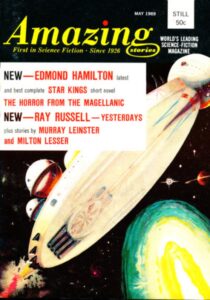 In his May 1969 editorial for AMAZING, White likened the development of the New Wave in science fiction to the 1960s revolution in rock music and the emergence of heavy metal and acid rock. He noted that this music could coexist with the more melodic rhythms of the Beach Boys and others. He also recognized that heavy rock drew on its rhythm-and-blues roots to express its new voice.
White saw no reason for science fiction not to follow the same pattern. Not only could all forms of science fiction exist side by side — the traditional alongside the modern — but the modern had developed from science fiction’s roots. By publishing both forms of science fiction in AMAZING, White could make it possible for the old and the new to influence each other.
Ted White strove to attract good fiction and new writers to the magazines. However, because he was paying the lowest rates in the field, he knew he wouldn’t have first shot at the best fiction around, but he might have a chance at some of the best experimental fiction, which had no ready market elsewhere, and thereby attract those writers who didn’t otherwise click with the establishment. Piers Anthony, David R. Bunch, F. M. Busby, Jack Dann, Avram Davidson, Gordon Eklund, George Alec Effinger, Philip José Farmer, R. A. Lafferty, Richard A. Lupoff, Barry N. Malzberg, Thomas Monteleone, Alexei Panshin, Christopher Priest, John Shirley, Robert Silverberg, James Tiptree, Jr., George Zebrowski, and others all found a home in Ted White’s AMAZING. They were joined by some of science fiction’s most exciting artists: Dan Adkins, Vaughn Bode, Doug Chaffee, Jeff Jones, Mike Kaluta, John Pederson, Jr., Joe Staton, and most significantly Mike Hinge.
PulpFest is pleased to welcome its 2016 Guest of Honor, author, editor, musician, and science-fiction and pulp fan Ted White. Winner of the Hugo Award for Best Fan Writer in 1968 and nominated for Best Professional Editor or for Best Professional Magazine throughout most of the seventies, Mr. White will speak about his career, AMAZING STORIES, science fiction fandom, the pulps, and much, much more on Saturday evening, July 23, from 7:30 to 8:15 in the Union Rooms on the second floor of the Hyatt Regency.
We look forward to seeing you at “Summer’s AMAZING Pulp Con” from July 21 through July 24 at the beautiful Hyatt Regency and the city’s spacious convention center in Columbus’s exciting Arena District. Please join us as editor emeritus Ted White helps PulpFest celebrate ninety years of AMAZING STORIES!
 Our guest of honor continues to publish professionally after more than sixty years of practicing his craft. His short story, “The Uncertain Past,” appeared in the March & April 2014 number of The Magazine of Fantasy & Science Fiction – featuring front cover art by Kent Bash – while “The Philistine” can be found in the October 2015 issue of Analog Science Fiction and Fact.
Amazing Stories likewise continues to be published, ninety years after its first issue. Revived in 2012 by longtime science-fiction fan Steve Davidson as an online magazine, you can find the new Amazing Stories at http://amazingstoriesmag.com/.
Our lead image is Ted White’s first issue of Amazing Stories, dated May 1969. Aside from an Edmond Hamilton novella (previously unpublished in English), a vignette by Ray Russell, and some non-fiction articles, the issue contained reprints from 1950s issues of Amazing. Even the cover art — by the late Johannes “Johnny” Brück — was a reprint. It was originally produced for Germany’s Perry Rhodan #276, “A Wrong Track Through Time.” Brück was a German artist who illustrated most of the 1799 covers of the series up to his death in 1955. He also created most covers for the Atlan spin-off series (about 800 issues), most of the 400 books in the paperback novel series, and other material for the series, including interior illustrations.
The World’s First Pulp Magazine—the leading American magazines of the late 1800s—HARPER’S, CENTURY MAGAZINE, and SCRIBNER’S—were beyond the financial and intellectual reach of the average U.S. citizen. It was left to Frank A. Munsey – a man about whom it has been suggested, “contributed to the journalism of his day the talent of a meat packer, the morals of a money changer and the manner of an undertaker” – to deliver the first American periodical specifically intended for the common man: “A magazine of the people and for the people, with pictures and art and good cheer and human interest throughout.”
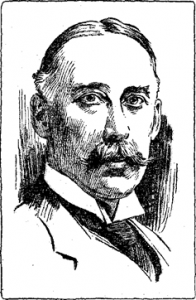 Born in Maine, Frank Munsey traveled to New York City and founded a children’s weekly, THE GOLDEN ARGOSY, in 1882. Working largely on credit, he struggled for years, building his circulation through advertising and sheer determination. Deciding the future lay in the adult market, he started MUNSEY’S WEEKLY in 1889 and soon converted it to MUNSEY’S MAGAZINE. In 1893, convinced a magazine could succeed only if the price was right, he slashed MUNSEY’S price to a dime and marketed it directly to newsdealers, cutting out the middleman.
As MUNSEY’S circulation climbed to hundreds of thousands of copies, the publisher converted THE ARGOSY to an adult magazine, similarly priced and modeled after its brethren. Envisioning a new kind of magazine, Frank Munsey wrote, “We want stories … not dialect sketches, not washed out studies of effete human nature, not weak tales of sickly sentimentality, no ‘pretty’ writing … We do want fiction in which there is a story, a force, a tale that means something – in short, a story. Good writing is as common as clamshells, while good stories are as rare as statesmanship.”
 In October 1896, THE ARGOSY became the first all-fiction magazine. Two months later, in a cost-cutting move, Munsey began printing it on the wood-pulp paper he used for his daily newspaper, and the rough-paper fiction magazine, or pulp, was born. Shortly thereafter, its circulation had doubled to about 80,000 copies per issue. By 1907, when the periodical celebrated its 25th anniversary, its circulation had reached half a million copies, earning its publisher about $300,000 per year.
In October 1896, THE ARGOSY became the first all-fiction magazine. Two months later, in a cost-cutting move, it began using the wood-pulp paper Munsey used for his daily newspaper, and the rough-paper fiction magazine, or pulp, was born. Within a short while, its circulation had doubled to about 80,000 copies per issue. By 1907, when the periodical celebrated its 25th anniversary, its circulation had reached half a million copies, earning its publisher about $300,000 per year.
Although not the most influential of pulp magazines – pulp scholar Ed Hulse has suggested that title belongs to THE ALL-STORY, a magazine that featured the first published stories of Edgar Rice Burroughs, Max Brand, and A. Merritt, plus the iconic characters John Carter, Tarzan, and Zorro – ARGOSY was widely read by a wide range of readers and enjoyed a long life. It lasted as a pulp – absorbing other titles and taking on new names – for over 1500 issues and nearly fifty years. After its August 1943 issue, it shifted to a slick format, reduced its fiction content, and eventually became a men’s adventure magazine. It ran into the 1970s, with its final number dated November 1979.
Please join PulpFest 2016 at 8:25 PM on Saturday, July 23, as we welcome pulp collector and scholar Doug Ellis to our programming stage in the Union Rooms on the second floor of the Hyatt Regency Columbus for a discussion of “120 Years of THE ARGOSY — The World’s First Pulp Magazine.”
Doug has collected and written about pulp magazines for over thirty years. In 1987, he founded Tattered Pages Press, a publishing house devoted to reprinting fiction from and books about the pulps. He’s the editor of the celebrated fanzine PULP VAULT and co-author, with John Locke and John Gunnison, of THE ADVENTURE HOUSE GUIDE TO THE PULPS. He’s also the author of UNCOVERED: THE HIDDEN ART OF THE GIRLIE PULPS and the co-founder of the Windy City Pulp and Paper Convention. In recognition of his service to the pulp community, Doug received a Lamont Award in 1996.
 During his presentation, Doug will briefly touch on ARGOSY’s early years, before its conversion to a pulp magazine. He will then turn his attention to the pulp’s beginnings and evolution, examining the magazine’s long history, including its mergers with other pulps, sale to Popular Publications, conversion to a bedsheet magazine, and later, to a men’s adventure magazine. Doug also plans to visit the many story types and great authors featured in the general fiction magazine, as well as its various series characters, including H. Bedford-Jones’ John Solomon, George F. Worts’ Peter the Brazen, and J. U. Giesy’s and Junius B. Smith’s Semi Dual.
Start planning to attend “Summer’s AMAZING Pulp Con” as we salute 100 years of specialty pulps and 120 years of the first pulp magazine, July 21 through July 24, at the Hyatt Regency Hotel and the city’s spacious convention center in the Columbus Arena District. You’ll have a rootin’-tootin’ time at the pop culture center of the universe.
In 1882, Frank A. Munsey founded The Golden Argosy, a children’s weekly. Fifty years later, Argosy publisher William DeWart wrote “The History of the Argosy Magazine,” published in the December 10, 1932 number. It included a line drawing of the magazine’s founder, pictured above. The artist is not known.
Beginning with its December 1896 issue (pictured above), Munsey converted The Argosy into the first pulp fiction magazine. For over 1500 issues and nearly fifty years, it battled on as a pulp. After its August 1943 issue, it switched to a slick format, reduced its fiction content, and eventually became a men’s adventure magazine. It lasted into the 1970s, with its final number dated November 1979.
In its early slick issues, Argosy used painted covers, including the July 1947 number with cover art by Charles Dye, a graduate of the American Academy of Art. Moving to New York City, Dye’s first freelance assignments were interior story illustrations for Popular Publications’ western pulp magazines. He later sold covers to Popular’s Adventure, Argosy, and other pulps. During the 1950s, he found steady work contributing covers and interior story illustrations to men’s adventure magazines, including Argosy, Outdoor Life, and Saga.
Saturday Night at the Auction—PulpFest‘s Saturday night auction, featuring auctioneers John Gunnison and Joseph Saine, will immediately follow Doug Ellis’ presentation on “120 Years of Argosy.”
Thanks for Your Help—year after year, there are countless individuals and organizations that help to make PulpFest an enjoyable experience for those who attend “Summer’s AMAZING Pulp Con. The PulpFest organizing committee thanks the following people and organizations for their invaluable assistance in making PulpFest 2016 a tremendous success. We could not have done it without you:
Our front desk staff – Maura Childers, Samantha Childers, Aaron, Jack, and Sally Cullers; our security staff – Sam Childers and Ben Hughes; our technical staff – Chuck and J. Welch; our auction staff – Lucy Denunzio, John Gunnison, Chet Reams, and J. Barry Traylor; our panelists and presenters – Danny Adams, Christopher Paul Carey, Joseph Coluccio, Barbara Doran, Win Scott Eckert, Doug Ellis, Andy Fix, Ron Fortier, Jeff Fournier, John Hegenberger, Ed Hulse, Tony Isabella, Walker Martin, Stephen T. Miller, Laurie Powers, Garyn G. Roberts, David Saunders, Paul Spiteri, and Anthony Tollin; Renee Thomas for the cakes; and the staffs of the Hyatt Regency Columbus and Greater Columbus Convention Center.
Many thanks to our guest of honor for this year’s convention, Ted White, editor emeritus of AMAZING STORIES and FANTASTIC, as well as Pulpmags newsgroup moderator Curt Phillips, for connecting us with Mr. White. Ted’s presentation was one of the highlights of PulpFest 2016.
The organizing committee would also like to thank the people who helped to create THE PULPSTER #25 – editor William Lampkin, assistant editor Peter Chomko, publisher Mike Chomko, plus contributors J. Randolph Cox, Tony Davis, David M. Earle, Melissa J. Flagstad – the daughter of Howard Browne – John Gunnison, Rog Holda, Barry N. Malzberg, Walker Martin, Elinor Mavor, Patrick L. Price, David W. Smith, Art Sippo, Anthony Tollin, Ted White, and Joseph Wrzos. We’re also grateful to the magazine’s advertisers – AbeBooks.com, Airship 27, Black Hood Press, Dick and Norma Enos, Flinch! Books, Flying Cars and Food Pills, Heartwood Auctions, Larque Press, MantiCon, Marcon, C. E. Martin, Meteor House, Mike Chomko Books, Murania Press, Pegana Press, Pro Se Productions, The Pulp Factory, ThePulp.Net, Radio Archives, Stark House Press, and the Windy City Pulp and Paper Convention.
Many thanks to Keith Culbertson, Mark Herbert, and, particularly, Rick Thomas for organizing our gaming events. Also to Victor Long and Jaime Myers from Fellowship of the White Star, Don Frick, Justin Ross, and Luke Woods from Pathfinder, and Josh Langley, Misty Long, and Byron Wingate from Rogue Cthulhu for serving as game-masters during the track’s second year. Thanks as well to Chaosium for the prizes donated to the PulpFest 2016 gaming track.
Our gratitude to the nominators and to the Lamont Award, Munsey Award, and Rusty Hevelin Service Award winners who helped select this year’s Munsey, Laurie Powers, and our special “retro” Lamont Award winner, David Saunders. Thanks also to Daniel Zimmer of the Illustrated Press for sponsoring our awards. Congratulations to Laurie and David, and all of the nominees for our 2016 Munsey Award.
Again, we’d like to thank the following organizations for the books and similar items that were donated to PulpFest for distribution to our members: AbeBooks.com, Airship 27, Chaosium, Inc., Engle Publishing and THE PAPER & ADVERTISING COLLECTORS’ MARKETPLACE, Gordon Van Gelder and THE MAGAZINE OF FANTASY & SCIENCE FICTION, Pro Se Productions, and Radio Archives. Many thanks to the Windy City Pulp and Paper Convention for loaning us their sound system. We’d also like to thank our website sponsors, AbeBooks.com, apamsaconference.org, EssayScribes.com, Galaxy Press, and PureCostumes.com.
Finally, thanks to Martin Grams, Tommy Hancock, Jeff Harper, Eric Johnson, Nathan Madison, Michael Neno, Rick Thomas, Scott Williams, and the many conventions, book and paper fairs, bookstores, comic and collectible shops, websites, magazines, newspapers, and other media outlets that helped to promote our show by distributing and displaying our advertising materials, as well as the dealers, attending members, and supporting members of PulpFest 2016. Your encouragement and support made our convention a success.
 We hope to see you all at PulpFest 2017 next summer. Please bring your friends.
Our theme will be “Hardboiled Dicks, Dangerous Dames, and a Few Psychos.” More details will be available in the coming months. Please bookmark the PulpFest website or follow us via RSS. You can also find information on our Facebook site, our Twitter account, and our Instagrampage.
If we’ve neglected anyone, please accept our apology and our gratitude. Write to mike@pulpfest.com, and we will correct the oversight.
Your PulpFest organizing committee – Mike Chomko, Jack Cullers, Sally Cullers, William Lampkin, Barry Traylor, and Chuck Welch
William Lampkin adapted Frank R. Paul’s cover art from the August 1927 issue of Amazing Stories, illustrating H. G. Wells’ “War of the Worlds,” to publicize the convention. He also adapted John Newton Howitt’s cover for the April 15, 1934 number of Dime Detective Magazine to promote PulpFest 2017.
Recordings from PulpFest 2016—we would much rather you get the full PulpFest experience by attending each year. But if you can’t attend, you can virtually sample highlights from PulpFest 2016 from the comfort of your own home.
Audio recordings from much of the programming at “Summer’s AMAZING Pulp Con” are now available online.
For the past few years, ThePulp.Net has posted audio recordings of many panels and presentations from PulpFest 2016. This year’s recordings total around seven-and-a-half hours of pulp discussions. A special coverage page for PulpFest 2016 with links to individual pages with photographs and embedded audio recordings from nine events.
The recordings include presentations on AMAZING STORIES, THE ARGOSY and the magazine’s artists, H. G. Wells, Street & Smith’s second-string heroes, LOVE STORY MAGAZINE and the romance pulps, and WESTERN STORY MAGAZINE and the pulp western, a celebration of the 10th anniversary of Sanctum Books, and PulpFest Guest of Honor Ted White’s talk.
In addition to listening to ThePulp.Net’s recordings online, pulp fans can download them as part of the Pulp Event Podcast for free from either iTunes or Google Play Music.
You can also find several on-the-spot reports from PulpFest 2016 on the Yellowed Perils blog.
 Over at Pulp Crazy, Jason Aiken has posted recordings of Ted White, FarmerCon XI author readings, a panel discussion including Paul Spiteri, Christopher Paul Carey, Win Scott Eckert, and Danny Adams on collaborating with Philip José Farmer, and a New Pulp panel featuring Ron Fortier of Airship 27, and writers Eckert, Jeff Fournier, Barbara Dorran, and Andy Fix.
While his other PulpFest posts at Pulp Crazy are recordings, Jason also has a written report on the convention, with photos.
As part of the Art’s Reviews podcast, Art Sippo is also posting recordings from PulpFest 2016. So far, Art has already posted a presentation by New Pulp author John Hegensberger, FarmerCon XI author readings, and an interview with New Pulp author Dick Enos. Art says he’ll post 11 recordings in total, so keep an eye on his Art’s Reviews podcast for updates in the coming weeks.
If you’re looking for more reports from PulpFest, head over to my PulpFest 2016 Reports entry at Yellowed Perils for a complete and up-to-date listing. Pictured to the rigt is Ted White speaking at PulpFest 2016.
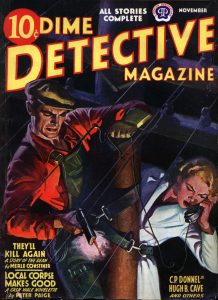 Happy Labor Day from PulpFest (Sept. 5, 2016)—on this day, when we honor America’s laborers, PulpFest is pleased to announce that our 2017 convention will be moving nineteen miles north of the exciting city of Pittsburgh, Pennsylvania, the former home of America’s steel industry.
PulpFest 2017 will take place July 27–30 at the newly renovated DoubleTree by Hilton Hotel Pittsburgh – Cranberry. We are currently arranging guest accommodations for our members at the hotel.
Conveniently located at the intersection of three major roadways, the DoubleTree boasts a world-class restaurant in an open-air setting. Many other restaurants nearby—some within walking distance—suit a variety of tastes. The more adventurous can discover plenty of dining, shopping, and nightlife just a short drive away in downtown Pittsburgh. The DoubleTree offers ample free parking and free wifi for its guests. Please stay tuned and bookmark our website as we iron out the details.
Start planning to attend PulpFest 2017, “Summer’s Hardboiled Pulp Con.” We’ll be celebrating pulp fiction and art, and the many ways they’ve inspired writers, artists, filmmakers, game designers, and other creators. Join us next July outside of Pittsburgh, Pennsylvania, as we explore “Hardboiled Dicks, Dangerous Dames, and a Few Psychos” at PulpFest 2017.
Rafael DeSoto began contributing interior story illustrations to Street & Smith’s western pulps in 1930. Two years later, he began selling freelance cover paintings to all the major pulp magazine publishers. DeSoto created the cover art for the November 1941 issue of Popular Publications’ Dime Detective Magazine
 The Last Martian—one of the last dinosaurs to attend the first Pulpcon—Robert Weinberg—passed away on September 25, 2016. A lover of pulps and science fiction to the very end, Bob was 70.
An editor, publisher, bookseller, and fanzine publisher–including PULP–Bob was one of the first publishers to concentrate on magazine stories from the pulps. In today’s print-on-demand world, we’ve seen an explosion of small presses releasing pulp reprints like never before. Back in the 1970s–years before digitalized text–Weinberg published several series that reprinted pulp fiction: INCREDIBLE ADVENTURES, LOST FANTASIES, PULP CLASSICS, and WEIRD MENACE.
Beyond his reprint work, Bob was an extremely active indexer. Beginning with AN INDEX TO ANALOG in 1965, Weinberg compiled bibliographies of the work of Robert E. Howard, the Cthulhu Mythos, the hero pulps, and more. His A BIOGRAPHICAL DICTIONARY OF SCIENCE FICTION AND FANTASY ARTISTS–published by Greenwood in 1988–is one of the leading works on the art of the fantastic.
The winner of the 1983 Lamont Award, Robert Weinberg joined Martin H. Greenberg as editor of LOVECRAFT’S LEGACY and, with Greenberg, Stefan R. Dziemianowicz, and others, edited WEIRD TALES: 32 UNEARTHED TERRORS, FAMOUS FANTASTIC MYSTERIES: 30 GREAT TALES OF FANTASY AND HORROR, HARD-BOILED DETECTIVES: 23 GREAT STORIES FROM DIME DETECTIVE MAGAZINE, and many other anthologies.
Beginning with “Destroyer,” a short story featured in the May 1969 issue of WORLDS OF IF, Weinberg began publishing genre fiction. Although his contributions to the world of fiction were rather infrequent during the seventies and most of the eighties, he increasingly turned to fiction writing with works such as THE DEVIL’S AUCTION, THE ARMAGEDDON BOX, and THE BLACK LODGE.
We bid adieu to this longtime science fiction and fantasy fan, author, editor, publisher, bookseller, fanzine creator, and pulp fan – known to his wife and son as “Our favorite Martian.”
A watercolor portrait of Robert Weinberg, painted by Jon Arfstrom, a special guest at PulpFest 2015.
The articles about The Pulpster #25, Street & Smith’s “Second-String Heroes,” and recordings from PulpFest 2016 were all written by William Lampkin.