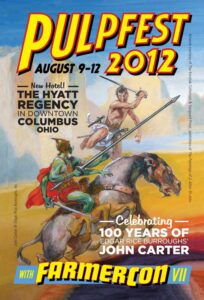
 The following posts cover the programming planned for PulpFest 2012, starting with the schedule originally released on August 2, 2012, titled “Just a Week to Go.”
PulpFest 2012 starts Thursday, August 9. The dealer room will be open only to registered sellers to set up their displays from 4 PM to 11 PM. Beginning at 8 PM, a full slate of programming will get underway. Ohio State’s Thompson Library will also offer a free lecture on the pulps at 4:30 PM. So there will be plenty to do for those who arrive early for the Summer’s Great Pulp Con!
Thursday, August 9
4:00 PM – 11:00 PM – Dealer Set-Up – the dealers’ room will be open only to dealers to assemble their displays.
4:30 PM – The Gunslinger-Writer – John Locke discusses the working conditions faced by the army of writers who labored for the pulps in this presentation at Ohio State’s Thompson Library.
6:00 PM – 9:00 PM – Early Registration – all members can register for PulpFest.
Evening Programming
8:00 PM – The French Connection – Rick Lai will discuss “How French Literature May Have Influenced American Pulp Heroes,” focusing on The Count of Monte Cristo, Arsene Lupin, Fantomas, Doc Savage, The Shadow, Zorro, and more.
9:00 PM – At the Newsstand with Hulse and Roberts – Professor Garyn G. Roberts and Blood ‘n’ Thunder editor Ed Hulse salute the 75th anniversary of John W. Campbell‘s arrival at Astounding Stories and the beginning of the Golden Age of Science Fiction.
10:00 PM – Tarzan: A Hero for the Ages – Henry G. Franke, III, editor of The Burroughs Bulletin, discusses Edgar Rice Burroughs’ best-known creation – Tarzan of the Apes and the character’s many incarnations in popular culture.
11:00 PM – The New Adventures of Tarzan – Blood ‘n’ Thunder editor Ed Hulse offers his insights into the history of Edgar Rice Burroughs’ involvement with the star-crossed 1934 film serial. A showing of the 72-minute cutdown of the chapter play will follow.
Friday, August 10
9:00 AM – 5 PM – Wheeling and Dealing – the dealers’ room will be open to all.
11:00 AM – Exiles of Kho Book Launch – author Christopher Paul Carey will be signing the limited edition release of his book
1:00 PM – The New Fictioneers – Christopher Paul Carey will read from his novel co-authored with Philip José Farmer, “The Song of Kwasin,” part of the Gods of Opar: Tales of Lost Khokarsa omnibus, forthcoming from Subterranean Press.
2:00 PM – The New Fictioneers – William Patrick Maynard will read from his new, fully authorized novel, The Destiny of Fu Manchu, a continuation of the classic mystery and adventure series created by Sax Rohmer.
3:00 PM – The New Fictioneers – Ron Fortier, editor-in-chief for Airship 27, will read from his award-winning Avenger story, “Vengeance Is Mine,” from The Justice Inc. Files.
Evening Programming
6:55 PM – Welcome to PulpFest – Jack Cullers offers an official welcome.
7:00 PM – Lord Tyger, Time’s Last Gift, and The Gods of Opar – our FarmerCon VII panelists discuss a sampling of Philip José Farmer’s Burroughs and Verne-inspired works. Paul Spiteri, editor of Pearls from Peoria, moderates, with authors Win Scott Eckert and Christopher Paul Carey.
8:00 PM – Guest of Honor Presentation – the award-winning science-fiction author and Burroughs authority Mike Resnick will talk about his years as a fan of Edgar Rice Burroughs and his early Burroughs pastiches. He’ll also explore his years as a pseudonymous author, and as a science-fiction professional and committed science-fiction fan.
9:00 PM – Barsoom and Beyond: Mars in the Pulps – panel presentation on various depictions of the Red Planet found in the pulps. Featuring Henry G. Franke, III, editor of The Burroughs Bulletin; Stephen Haffner of Haffner Press; noted pulp historian Will Murray; and Garyn G. Roberts, editor of The Prentice Hall Anthology of Science Fiction and Fantasy. Moderated by PulpFest’s Ed Hulse.
10:00 PM – James Allen St. John – David Saunders examines the life and work of J. Allen St. John, the artist most associated with the work of Edgar Rice Burroughs.
11:00 PM – Tarzan on Mars – the film program includes Bob Clampett’s 1936 animated footage from Warlord of Mars and the United States premiere of Last Flight, a short film made in New Zealand set on Mars. I, Tarzan features George McWhorter, editor emeritus of The Burroughs Bulletin, Philip José Farmer, Grand Master of Science Fiction, and popular culture expert Francis Lacassin in a discussion about Edgar Rice Burroughs’ most famous creation, Tarzan.
Saturday, August 11
9:00 AM – 5 PM – Wheeling and Dealing – the dealers’ room will be open to all.
11:00 AM – Captain Action Book Signing – Jim Beard will be signing copies at the Airship 27 tables.
1:00 PM – The New Pulp Fiction – Ron Fortier of Airship 27 moderates a panel featuring contemporary authors inspired by the pulp fiction of yore. Jim Beard, Rick Lai, William Patrick Maynard, Art Sippo, and Duane Spurlock will join Ron for a discussion of New Pulp fiction.
2:30 PM – The New Fictioneers – one of the founders of the New Pulp movement, Win Scott Eckert, will read from works written for The Green Hornet: Still at Large, The Avenger: Tales from the Roaring Crucible, and The Worlds of Philip José Farmer 3.
3:30 PM – A Tribute to Howard Hopkins and David Burton – author and editor Win Scott Eckert and Wild Cat Books publisher Ron Hanna will lead a celebration of the lives and works of these two creative pulp fans, recently departed.
Evening Programming
7:00 PM – PulpFest 2012 Business Meeting – all members are invited to ask questions and offer suggestions at this session.
7:20 PM – 2012 Munsey Award Presentation – the award will be presented by Anthony Tollin, the winner of last year’s Munsey. A brief tribute to Rusty Hevelin, the guiding light of Pulpcon, will also take place.
7:30 PM – The Illustrated Conan – artists Jim and Ruth Keegan offer a look at Conan of Cimmeria as depicted by various illustrators over the last eight decades. They will be joined by Mark Schultz, who will offer a contemporary perspective on illustrating Robert E. Howard’s barbarian king.
8:30 PM – Robert E. Howard’s Conan and the Birth of Sword and Sorcery – Rusty Burke, president of the Robert E. Howard Foundation moderates this panel about Conan of Cimmeria and the author who created the sword-and-sorcery genre. Panelists include Don Herron, editor of The Dark Barbarian and The Barbaric Triumph; Brian Leno, an award-winning Howard scholar; and John D. Squires, publisher of JDS Books.
9:30 PM – Saturday Night at the Auction – bring your PulpFest badge and your checkbook and get ready to snatch up some of the gems and bargains typically offered. In addition to the usual PulpFest consignments, pulp historian Albert Tonik’s substantial collection will be up for bids.
Sunday, August 12
9:00 AM – 2 PM – Wheeling and Dealing – the dealers’ room will be open to all.
William Lampkin adapted J. Allen St. John’s original cover art for the March 1941 issue of Amazing Stories, illustrating Edgar Rice Burroughs’ “The City of Mummies.” The artwork is courtesy of the Korshak Collection and Vanguard Productions, publishers of The Paintings of J. Allen St. John.
Mike Resnick Coming to PulpFest
Jan. 22, 2012 — PulpFest 2012 is very pleased to welcome award-winning science-fiction writer Mike Resnick as its guest of honor. Winner of five Hugo Awards and a Nebula Award, Mike first became involved in science fiction through the work of Edgar Rice Burroughs. For a time, he was an associate editor for Camille Cazedessus’ ERB-dom, the award-winning fanzine.
With 2012 being the hundredth anniversary of the start of Edgar Rice Burroughs’ writing career, it is fitting that our guest of honor is a writer who, early in his career, “Wanted nothing more than to write books in the style of Edgar Rice Burroughs.”
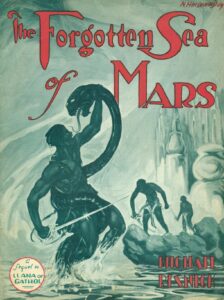 Mike’s first published work of science fiction, The Forgotten Sea of Mars, was a sequel to Burroughs’ Llana of Gathol. After its 1965 release, Resnick transformed and expanded the story into The Goddess of Ganymede, published in hardcover by Donald Grant in 1967. A paperback sequel, Pursuit on Ganymede, followed in 1968.
For his fourth novel, Resnick took a slightly different tack. Entitled Redbeard and published by Lancer Books, it drew inspiration from the tremendous success of the publisher’s Conan paperback reprints of Robert E. Howard’s stories of the Cimmerian.
Although Resnick’s initial foray into science fiction was heavily influenced by Burroughs and Howard, it was not what he wanted to be remembered for. Believing that he had made a false start, he stopped writing science fiction in 1968 and worked to hone his writing skills. For a dozen years, he concentrated on writing pseudonymous adult fiction and Gothic romances, selling hundreds of novels and short stories and several thousand articles. He also edited tabloid newspapers and men’s magazines. But all the while, Resnick intended to become a science-fiction professional.
“When I was 21, I went to my first Worldcon. There were giants present. Doc Smith bought me a cup of coffee. Jack Williamson encouraged me to try to become a science fiction writer. Isaac Asimov was handing out Hugos to people like Philip K. Dick and Jack Vance. I knew long before the convention was over that I wanted to devote my life to this field.”
In 1981, Resnick returned to the science fiction field with The Soul Eater, a reworking of Herman Melville’s Moby Dick. His breakthrough novel, the international bestseller Santiago, was published by Tor in 1986. He has since won five Hugo Awards and has been nominated for 36 more (a record for a writer), 11 Nebulas, a British Clarke Award, and many other awards. In 1993, he received the Skylark Award for Lifetime Achievement in Science Fiction, presented annually by the New England Science Fiction Association. According to Locus Magazine, Mike is the leading award winner, living or dead, in the short fiction category, and fourth all-time when including novels.
Although Mike Resnick left behind his desire to do “nothing more than to write books in the style of Edgar Rice Burroughs,” he continued to appreciate the author’s creations. Recently, he wrote introductions to Wildside Press’ The Tarzan Twins, Bison Books’ The Land That Time Forgot, and Philip José Farmer’s Tarzan Alive. With Bob Garcia, Mike is editing The Worlds of Edgar Rice Burroughs, an anthology of mostly original stories inspired by Burroughs and his creations. It will be published by Baen Books and feature stories by Kevin J. Anderson, Kij Johnson, Mercedes Lackey, Joe Lansdale, Jack McDevitt, Michael Moorcock, Kristine Katherine Rusch, F. Paul Wilson, and others, plus the first appearance of Resnick’s “The Forgotten Sea of Mars” in nearly fifty years.
Despite his desire to leave his pulp-inspired roots behind, some stories, such as Santiago and the Widowmaker series, have been called space operas, a genre popular in Planet Stories and other pulps. His recent steampunk novels, The Buntline Special and The Doctor and the Kid, are being marketed as “Weird Westerns” by their publisher. However, more than any other work, his Lucifer Jones stories are most often linked to the rough-paper magazines. The author himself has called the series “a parody of every bad pulp story and ‘B’ movie.” Resnick also compiled one of the first pulp guides, The Official Guide to the Fantastics, published by House of Collectibles in 1976.
Now a science-fiction professional for more than thirty years, the former associate editor of Camille Cazedessus’ ERB-dom remains a devoted science fiction fan and still contributes articles to fanzines and convention program books. You can still read many of his essays by visiting mikeresnick.com.
Neal MacDonald, Jr. contributed the cover for The Forgotten Sea of Mars, Mike Resnick’s first published work of science fiction, published by Camille R. Cazedessus, Jr., in 1965.
At the Newsstand with Hulse & Roberts
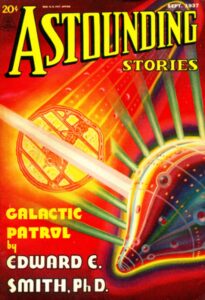 May 6, 2012 – Although much of our 2012 programming revolves around the centennials of Edgar Rice Burroughs’ Tarzan and John Carter, and the 80th anniversary of Robert E. Howard’s Conan, we’re also celebrating another important anniversary in pulp history.
Almost 75 years to the day, the September 1937 Astounding Stories hit newsstands across the United States. That issue was the first to benefit from input from John W. Campbell, a pioneering science-fiction writer hired to assist F. Orlin Tremaine, who had led the magazine since Street & Smith purchased it from publisher William Clayton in 1933. With Tremaine’s guidance, Astounding had become the preeminent science fiction pulp, but its best days were yet to come. Just months after joining the magazine’s staff, Campbell assumed full editorial control and promptly instituted policies that ushered in what later became known as the Golden Age of Science Fiction.
Within a few short years, John Campbell had assembled a stable of writers that included talented newcomers and reliable mainstays alike. His roster of contributors was unparalleled by any other magazine in the field, and the first six years of his tenure as editor saw the publication of such classic science-fiction stories as “Slan,” “Who Goes There?”, “Final Blackout,” “Sixth Column,” “Methuselah’s Children,” “Beyond This Horizon,” “Gather, Darkness!”, three of E. E. Smith’s “Lensman” novels, and the early installments of Isaac Asimov’s “Foundation” series.
PulpFest 2012 will honor this remarkably fecund period in Astounding‘s long history with a unique presentation. Rather than entrust it to a single speaker or a panel of enthusiasts, Garyn G. Roberts, PhD., and Blood ‘n’ Thunder editor Ed Hulse will lead our salute to Campbell and the magazine’s Golden Age. Both are well qualified to discuss Campbell’s influence and Astounding‘s peak years.
Garyn Roberts is a popular culture professor and the editor of The Prentice Hall Anthology of Science Fiction and Fantasy (2000), while Ed Hulse has written extensively about Astounding’s Golden Age, most recently in The Blood ‘n’ Thunder Guide to Collecting Pulps (2007).
Roberts and Hulse plan to take a “Siskel-and-Ebert” approach to their conversation, citing their favorite Astounding authors and stories while debating the merits of individual yarns that appeared in the magazine during the years under review. Their discussion will be accompanied by a slideshow of Astounding covers from September 1937 to November 1943. We’re not aware of any pulp-convention presentation that has employed this format, and we think it’ll be something special.
Join PulpFest on Thursday, August 9 for “At the Newsstand with Hulse and Roberts.”
The September 1937 issue of Astounding Stories featured a cover by Hans Wessolowski.
Leading Artists to Attend PulpFest 2012.
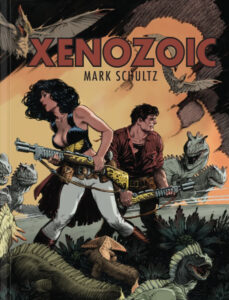 June 3, 2012 – PulpFest is pleased to announce that author and illustrator Mark Schultz, best known for his award-winning comics series Xenozoic Tales, will be appearing at the “Summer’s Great Pulp Con” in August. Mark, along with his friends Jim and Ruth Keegan, will be joining PulpFest 2012 to help celebrate the 80th anniversary of Robert E. Howard’s Conan.
A Pennsylvania native, Mark Schultz has always loved a good story. At the age of six, he discovered both comics and classic adventure films. He was later inspired by such fantasy authors as Edgar Rice Burroughs and Robert E. Howard, and by the artists who illustrated their work, including Frank Frazetta, Roy Krenkel, and Al Williamson.
A 1977 graduate of Kutztown University with a Bachelor of Fine Arts degree, Mark worked in the advertising industry before embarking on a career in comic books, writing, and illustration. His first published comics work was a story featuring Robert E. Howard’s Kull for Marvel Comics’ The Savage Sword of Conan. Soon after, Mark’s story “Xenozoic!” appeared in Death Rattle #8, published by Kitchen Sink Press.
Mark’s popular, award-winning comic book, Xenozoic Tales, premiered in February 1987. It ran for fourteen issues, produced over ten years, and spawned a CBS cartoon series, a video game, action figures, trading cards, a candy bar, and more. In late 2010, Flesk Publications reprinted the original comic book series as Xenozoic.
The winner of five Harvey Awards, two Eisners, an Inkpot, a Spectrum Award, and three Haxturs for comics published in Spain, Mark originally became interested in the work of Robert E. Howard through the Lancer paperbacks of the late sixties. His professional involvement with Howard’s fiction began when Wandering Star asked if he would be interested in illustrating a Howard book. The result, Conan of Cimmeria, Vol. One (1932-1933), was published in the United Kingdom in 2003. The first US edition, also illustrated by Schultz, was published by Del Rey later the same year.
“I think Howard was an amazing stylist, with a highly personal vision, who never got a chance to develop fully, due to both the time and formula constraints of writing for the pulps, as well as his early death. Much is made of REH’s power as a pure storyteller, but I think it’s important to note his ability to mold the English language. He had a very muscular, economical way with words. His descriptive powers were awesome, and his ability to make action sing is unmatched. His best stories are very good. Most importantly, his plots and writing style served to express a unique and consistent viewpoint — a view of life. I think that’s what sets him apart from all the hundreds of other adventure writers who come and go. Unlike the hacks, his stories serve to illuminate his strong, idiosyncratic point of view. And with Conan, he had created a character vivid enough to contain and fully express that point of view.”
In addition to his work for Wandering Star and Del Rey, Mark has also illustrated the autobiography of Charles R. Knight, the influential American artist known for his paintings of dinosaurs and other prehistoric animals. As an author, he has written The Stuff of Life: A Graphic Guide to Genetics and DNA and The Flash: Stop Motion, a novel featuring the DC Comics superhero. Since 2004, Mark has also scripted the Prince Valiant newspaper strip. He is currently illustrating Storms at Sea, a novella he wrote for Flesk Publications.
Mark Schultz will be joined by “Two-Gun” Jim & Ruth Keegan, best known for their comic strip series The Adventures of Two-Gun Bob, published by Dark Horse Comics, at the “Summer’s Great Pulp Con” in August.
The Keegans met at the Art Institute of Philadelphia in 1982, and quickly discovered that they shared a love of comics, illustration, pulps, and old movies. After moving to Los Angeles, they began their careers as graphic designers, co-art directing Comics Feature magazine, and later working as separate freelance commercial illustrators and designers. The tight deadlines and ever-changing content of commercial art led them to swap jobs back and forth — combining their strengths to collaborate on each illustration. In the years that followed, they worked as product illustrators, editorial cartoonists, storyboard/production artists, and special effects designers for print, film, stage and television.
In August of 1997, the Keegans began a long association with the work of Robert E. Howard when they joined the Robert E. Howard United Press Association (also known as REHupa), and began producing the first episodes of their comic strip, “The Adventures of Two-Gun Bob.” This work brought them to the attention of Wandering Star publisher Marcelo Anciano, who engaged them to design a variety of materials, including a series of artist sketchbooks for Gary Gianni and Mark Schultz, the graphic novel Worms of the Earth (2000), the unique Black Stranger Manuscript Facsimile (2002), and ultimately The Illustrated World of Robert E. Howard (2004).
Their work with Wandering Star led Del Rey to hire the Keegans to illustrate its 2007 two-volume set, Crimson Shadows and Grim Lands. They subsequently acted as art directors for additional books in the Del Rey series, including The Horror Stories of Robert E. Howard (2008), El Borak and Other Desert Adventures (2010), and Sword Woman and Other Historical Adventures (2011).
Beginning in 2004, Dark Horse Comics editor Scott Allie invited Jim & Ruth to contribute new, continuing episodes of “The Adventures of Two-Gun Bob” to each issue in their line of Robert E. Howard comics, including Conan, Solomon Kane, and Kull. After 8 years and 160 episodes (and counting), the strip has won Jim & Ruth multiple awards and critical praise.
“These biographical strips by the Keegans that run in DH’s Conan comics are really remarkable. They do more to capture and explain the life of Robert E. Howard than any of the essays or articles.”
The Keegans have illustrated a number of dust jackets for the Robert E. Howard Foundation (including Tales of Weird Menace) and provided design and coloring to numerous books and comics, including Gary Gianni’s Corpus Monstrum, which received a 2003 Eisner Award nomination for Best Publication Design. Their comic “The Gris-Gris” appeared in The Dark Horse Book of Witchcraft (2004), and two strips based on the life of H. P. Lovecraft will be appearing in Dark Horse’s Creepy #10.
Along with continuing their Two-Gun Bob strips, the Keegans are also working on an illustrated edition of Logan’s Run by William F. Nolan and George Clayton Johnson, to be published by Centipede Press. They’re currently working on a complex graphic novel that mixes painting and comics, historical biography, and fiction. You’ll find more about this talented couple at the Jim and Ruth Keegan website.
In addition to displaying some of their Howard-related work in the PulpFest dealers’ room, the Keegans, along with fellow artist Mark Schultz, will discuss the artistic challenges of illustrating Howard’s work, with a historical overview of eight decades of Conan art, during PulpFest’s Saturday evening programming.
Register now for PulpFest 2012 for a chance to meet three of the best contemporary illustrators of Robert E. Howard’s Conan.
Flesk Publications first published Mark Schultz’s collection, Xenozoic, in 2010.
Barsoom & Beyond: Mars in the Pulps
June 10, 2012 — Mars, the Red Planet. Edgar Rice Burroughs called it Barsoom, and this year marks the 100th anniversary of his “Under the Moons of Mars,” originally serialized in Munsey’s The All-Story in 1912. But ERB was one of many authors to write about Mars for the pulps. On Friday, August 10, PulpFest‘s Ed Hulse will take a look at several visions of Mars as he moderates a panel called “Barsoom & Beyond: Mars in the Pulps.”
Four expert panelists will join Ed. Henry G. Franke III, editor of The Burroughs Bulletin and treasurer of the Burroughs Bibliophiles, will discuss the Martian novels of Edgar Rice Burroughs, including such classics as The Gods of Mars and The Warlord of Mars. Stephen Haffner, publisher of Haffner Press, will be on board for a look at Leigh Brackett’s Mars stories –“Martian Quest,” “Sea-Kings of Mars,” “Queen of the Martian Catacombs,” and other planetary romances. Pulp scholar Will Murray, author of The All-New Wild Adventures of Doc Savage, will examine The Swordsman of Mars and The Outlaws of Mars, two novels by Otis Adelbert Kline originally serialized by Argosy in the early thirties. Finally, Garyn G. Roberts, editor of The Prentice Hall Anthology of Science Fiction and Fantasy, will discuss the works of the late Ray Bradbury, whose Martian Chronicles began with “The Million Year Picnic” in the Summer 1946 issue of Planet Stories. Garyn was also Ray Bradbury’s friend for thirty years.
In addition to helping to organize PulpFest, panel moderator Ed Hulse is the editor of Blood ‘n’ Thunder, a journal for aficionados of adventure, mystery, and melodrama from the early 20th century, and the publisher of Murania Press books.
Robert E. Howard’s Conan and the Birth of Sword and Sorcery
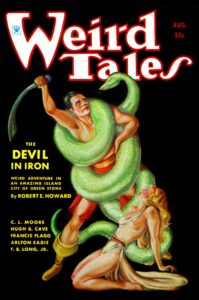 June 14, 2012 – This year marks the 80th birthday of Conan the Cimmerian, Robert E. Howard’s lusty barbarian who debuted in the December 1932 issue of Weird Tales. Conan quickly became a reader favorite and appeared in many stories over the next four years.
PulpFest will celebrate the Cimmerian’s eightieth birthday and honor Howard’s career with two very special programs. First will be our panel featuring artists and illustrators Jim and Ruth Keegan and Mark Schultz. They’ll discuss the artistic challenges of illustrating Howard’s work, with a historical overview of eight decades of Conan art.
Afterward, Rusty Burke will moderate a panel of REH experts who will discuss Conan, Howard’s other characters, and the author’s influence on the sword-and-sorcery genre.
Rusty Burke needs no introduction to devotees of “Two-Gun Bob.” He is the editor of the highly acclaimed Howard reprint series published in the United States by Del Rey Books, the president of the Robert E. Howard Foundation, and a long-time participant in the Robert E. Howard United Press Association.
Joining Rusty will be Don Herron, editor of The Dark Barbarian (Greenwood Press, 1984), the first book to treat Howard’s work seriously, and its sequel, The Barbaric Triumph (Wildside Press, 2004). For a quarter century, Don has been leading San Francisco’s Dashiell Hammett Tour, the longest-running literary tour in the United States. Also on board will be Brian Leno, an award-winning Howard scholar whose essays have appeared in The Cimmerian, REH: Two-Gun Raconteur, and Up and Down These Mean Streets, and John D. Squires, an Ohio bookseller with broad, deep knowledge of fantastic fiction. John is an expert on the work of M. P. Shiel and publisher of JDS Books and The Vainglory Press.
Margaret Brundage created the cover art above for the August 1934 issue of Weird Tales, illustrating Robert E. Howard’s Conan story, “The Devil in Iron.” Girasol Collectables provided the scan.
Resnick Speaks!
June 18, 2012 – On Friday, August 10, PulpFest guest of honor Mike Resnick will talk about his many years as an author and editor. With 2012 being the centennial of the start of Edgar Rice Burroughs’ writing career, it is fitting that our guest of honor is an author who, early in his career, “wanted nothing more than to write books in the style of Edgar Rice Burroughs.”
Mike’s first three published science fiction works, including The Forgotten Sea of Mars (1965), were pastiches of Burroughs’ Mars novels. But not wanting to be remembered for merely imitating works he once admired, Resnick stopped writing science fiction and worked to hone his writing skills. For a dozen years, he wrote pseudonymous adult fiction and Gothic romances, selling hundreds of novels and short stories and several thousand articles. He also edited tabloid newspapers and men’s magazines, all the while intending to become a science-fiction professional.
Mike will talk about his years as a fan of Edgar Rice Burroughs, including his association with Camille Cazedessus’ ERB-dom, and his early Burroughs pastiches. He’ll also explore his years as a pseudonymous author, putting food on the table while developing his own style. He’ll also discuss his long involvement in the science-fiction universe, both as a fan and as a professional, and his plans for The Worlds of Edgar Rice Burroughs, a forthcoming anthology he is editing with Bob Garcia for Baen Books.
Please join PulpFest 2012 for a delightful hour with one of science fiction’s leading raconteurs.
FarmerCon Returns to PulpFest
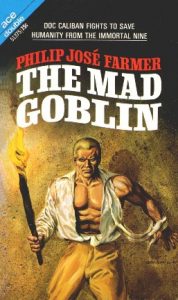 June 22, 2012 – PulpFest is very happy to report that FarmerCon VII will be held at our convention. An annual gathering for fans of Grand Master of Science Fiction Philip José Farmer, FarmerCon returns for the second straight year to Columbus, Ohio, to commemorate the celebrated author, his fiction, and his pulp roots.
FarmerCon began in Peoria, Illinois, the author’s hometown, soon after Phil had won the Grand Master Award in 2001. To honor the event, the city’s public library staged a reception for the author. Farmer enthusiast Michael Croteau spread the word through his website, The Official Philip José Farmer Web Page. This brought fans from across the country to Peoria. Soon after, FarmerCon was born.
After Phil and Bette Farmer passed away in 2009, the organizers decided to take FarmerCon on the road to broaden its horizons. By holding FarmerCon alongside events like PulpFest, Farmer fans get a variety of programming and a room full of pulp and book dealers to enjoy.
Once again, FarmerCon will have its own programming. At 7:10 PM on Friday, August 10, Paul Spiteri, editor of Pearls from Peoria, will moderate a panel featuring authors Win Scott Eckert and Christopher Paul Carey. Entitled “Lord Tyger, Time’s Last Gift, and the Gods of Opar,” the presentation will examine several Farmer novels related to Edgar Rice Burroughs’ Tarzan and Jules Verne’s works.
Later the same evening, FarmerCon will sponsor a showing of the film I, Tarzan. Set in an English castle, this French documentary features George McWhorter, editor emeritus of The Burroughs Bulletin; Philip José Farmer; and popular culture expert Francis Lacassin discussing Edgar Rice Burroughs’ most famous creation, Tarzan. An exploration of Burroughs’ rich and diversified character, I, Tarzan is full of fun, fancy, and mystery.
The artwork above is by Gray Morrow for the 1970 Ace Double edition of Lord of the Trees and The Mad Goblin.
James Allen St. John
June 28, 2012 — J. Allen St. John, the most famous illustrator of Edgar Rice Burroughs’ work, will be the subject of a talk by David Saunders, the leading expert on pulp art and an author of numerous articles and books on pulp artists.
St. John was born in 1872 and was inspired at an early age to study art. His first published works appeared in The New York Herald in 1898. After settling in Chicago in 1912, he began working as a commercial artist for several Midwest publishers of books, newspapers, and magazines. One of these was A. C. McClurg, the publisher of Edgar Rice Burroughs’ novels in book form. In 1915, he illustrated The Return of Tarzan, the first of many ERB novels for which the artist would become renowned.
On Friday, August 10, David Saunders will present many glorious examples of St. John’s finest works, along with behind-the-scenes photos of the artist, his studio, his art school, his private club, and rare sketches of familiar masterpieces to better appreciate his working methods.
David will also show a short silent film that shows J. Allen St. John teaching an art class and mugging for the camera. He came across the rare footage while researching an obscure art club in Chicago, and has since identified it as a 1928 document of the Chicago Businessmen’s Art Club, a private club of professional newspaper and advertising artists that wanted to hone their skills and socialize with each other.
In addition to his work in pulp art history, David is an accomplished artist whose works are in the collections of the Metropolitan Museum of Art, the Museum of Modern Art, and many other public venues. He also created the Munsey Award, presented annually at PulpFest.
Edgar Rice Burroughs, Film Producer
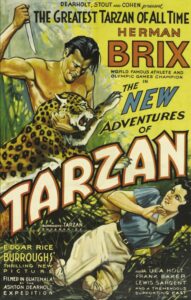 July 18, 2012 — In 1934, after years of unsatisfactory dealings with Hollywood studios, Edgar Rice Burroughs entered into partnership with an old friend to produce motion pictures adapted from his novels and characters. Late that year, the ill-fated Burroughs-Tarzan Enterprises sent an expedition to Guatemala to film a 12-chapter serial titled The New Adventures of Tarzan.
This complicated undertaking proved to be a bigger adventure than anything the serial’s scriptwriters had concocted. At various points during the production, cast and crew ran out of food, water, and money. Severe weather, logistical problems, and countless illnesses beset the entire unit.
Former Olympic athlete Herman Brix, making his starring debut as Tarzan, gave an exclusive interview to Blood ‘n’ Thunder editor Ed Hulse in 2002. The actor’s insights, combined with Ed’s own research, laid several myths to rest while adding important details to the extraordinarily rich history of ERB’s involvement with The New Adventures of Tarzan.
On Thursday, August 9th, at 11 PM, Ed will offer his insights into the history of Edgar Rice Burroughs’ involvement with the 1934 film serial. Following the presentation, PulpFest will run the 72-minute cutdown of the chapter play, released simultaneously under the same title, The New Adventures of Tarzan, for theaters that did not book serials. A question-and-answer session will end the night.
Above is a poster advertising The New Adventures of Tarzan, a “thrilling new picture filmed in Guatemala by the Ashton Dearholt Expedition.”
Tarzan: A Hero for the Ages
July 19, 2012 – In October of 1912, not long after introducing John Carter of Mars, Edgar Rice Burroughs debuted Tarzan of the Apes, the original twentieth-century superhero. The singular creation of a then-fledgling author, Tarzan was a savage yet principled character who struck a chord with readers of every age, race, and nationality. He wasn’t an alien from another world, nor did he acquire any special powers or magic in his relentless fight to protect the African jungle and its inhabitants. But he was indeed a superhero.
Almost immediately after his introduction, Tarzan became a cultural phenomenon, spawning a trademark that spread throughout multiple media and business outlets. The first Tarzan film came in 1918, followed by a comic in 1929, a radio series in 1932, and, as the century progressed, television, gaming, merchandising, animation, the Internet, and, soon after the century turned, a Broadway musical. Burroughs’ character somehow possesses a strange plasticity that lets him fit into countless, even contradictory, kinds of stories. In short, way back in 1912, when he first came into the public eye through The All-Story, Tarzan became the first of a generation of multimedia superstars. One hundred years later, the name “Tarzan” still conjures instant recognition for millions of people worldwide.
On Thursday, August 9, please join PulpFest in welcoming Henry G. Franke, III, editor of The Burroughs Bulletin and treasurer of The Burroughs Bibliophiles, as he presents “Tarzan: Hero for the Ages,” a look at the multimedia character created by the wonderfully imaginative Edgar Rice Burroughs.
The French Connection
July 21, 2012 – If you are familiar with the lives of the yarn-spinners who labored for the pulp industry, you know that most of them were well-read. So it should come as no surprise that French literature may have influenced the creation of American pulp characters such as Doc Savage, The Spider, and even Stahlmaske, a major villain in Robert J. Hogan’s G-8 and His Battle Aces.
On Thursday evening, August 9th, Rick Lai, author of Chronology of Shadows: A Timeline of The Shadow’s Exploits, The Revised Complete Chronology of Bronze, Rick Lai’s Secret Histories: Criminal Masterminds, and Rick Lai’s Secret Histories: Daring Adventurers, will explore “The French Connection: How French Literature May Have Influenced American Pulp Heroes.”
In his presentation, Rick will look at such works as Alexandre Dumas’ The Count of Monte Cristo and The Man in the Iron Mask, Maurice Leblanc’s Arsène Lupin stories, Gaston Leroux’s The Phantom of the Opera, and the Fantômas stories of Marcel Allain and Pierre Souvestre, and how they may have influenced such writers as Lester Dent, Walter Gibson, Johnston McCulley, Norvell Page, and Theodore Tinsley.
Other works that Rick plans to explore include Honoré de Balzac’s Lost Illusions, Atlantida by Pierre Benoît, Arthur Bernède’s Judex, Paul Féval’s Le Bossu, and the controversial Eugene Sue novel, The Wandering Jew.
You don’t really need to speak French to enjoy Rick’s presentation, but you certainly should come with an open mind. Join PulpFest at 8 PM on August 9 to kick off the convention’s exceptional programming schedule.
Tarzan on Mars
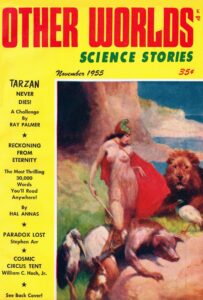 July 22, 2012 – In late 1955, Ray Palmer initiated a campaign to get Stuart J. Byrne’s “Tarzan on Mars” approved for publication. Palmer issued his plea in the November 1955 issue of Other Worlds Science Stories. Although the Burroughs estate never authorized the novel, Byrne’s manuscript became legendary in science-fiction fandom and appeared in limited editions over the years.
Now PulpFest is not planning another edition of the Byrne yarn – after all, we’re already giving you The Pulpster – but we are planning a film program for the wee hours of Friday evening, August 10. It will combine the two Burroughs series that we’re celebrating at this year’s convention, Tarzan and Mars.
Animator Bob Clampett gets the ball rolling with footage from a cartoon adaptation of Burroughs’ Mars books. The creator of Beany and Cecil, Clampett approached Edgar Rice Burroughs in 1936 with an idea for a series of short animated films based on the author’s John Carter novels. Burroughs loved the idea and Clampett, with the help of Chuck Jones and Bobe Cannon, created six minutes of test footage for MGM. Unfortunately, the studio nixed Clampett’s proposal and John Carter of Mars died aborning. Now we’ll see what we missed.
Following the Clampett footage, PulpFest will show Damon Keen’s short film, Last Flight. Produced amidst the volcanic mountains of New Zealand, Keen’s movie concerns a lone astronaut on a perilous trek across the windswept deserts of Mars. With her oxygen supply running out and her only company sporadic transmissions from Earth counting down the minutes to global war, the astronaut is forced to search for a way to come to terms with her circumstances – for herself and for the future of life in the universe.
Produced with support from Creative New Zealand and the New Zealand Film Commission, Last Flight has screened at several international film festivals. PulpFest 2012 will mark the United States premiere of Keen’s motion picture.
A French documentary about the origin and history of Tarzan will conclude the evening. I, Tarzan first appeared on French television in 1996. Set in an English castle, the film features George McWhorter, editor emeritus of The Burroughs Bulletin; science-fiction author Philip José Farmer; and popular culture expert Francis Lacassin discussing Edgar Rice Burroughs’ most famous creation. An exploration of the fabulous jungle lord, I, Tarzan is full of fun, fancy, and mystery.
Tarzan never quite made it to Mars, but PulpFest attendees can sample some rare treats with these three fine films.
Appearing above is the November 1955 issue of Other Worlds Science Stories featuring “Tarzan Never Dies! A Challenge,” by Ray Palmer. The front cover art is by J. Allen St. John.
Gunslinging Writers: The Fast-Typing Working-Class Authors of the Pulps
July 25, 2012 –Like the gunslingers of the Wild West, pulp fiction authors survived by being fast. Beginning at 4:30 PM on Thursday, August 9, pulp historian, author, and publisher John Locke will discuss the complex working conditions faced by the army of writers who labored at breakneck speed to provide millions of words — all at 1- to 2-cents apiece — of popular fiction to the countless numbers of science-fiction, western, adventure, romance, hero, war, sports, detective, crime, and mystery fiction magazines of the early twentieth century.
Mr. Locke will describe the era of the cheap fiction magazine and the pop-culture legacy of the pulps, with particular emphasis on how the constantly shifting economics of the pulps affected the work and output of its writers, editors, and publishers.
The professional writers’ magazines of the early twentieth century illustrate, in tangible and personal ways, the difficulties, attractions, and realities of life as a cent-a-word, pulpwood “hack.” Using articles culled from these magazines, Mr. Locke will demonstrate how would-be pulpsters were advised on the best ways to plot and pace a high-seas adventure tale or science-fiction yarn. From the same sources, he’ll also provide snapshots of the markets for cheap fiction at the time and the occasional first-hand account of a pulp author’s life.
Copies of Mr. Locke’s 2004 book, Pulp Fictioneers: Adventures in the Storytelling Business (Adventure House), will be available for purchase after the lecture. John’s lecture will take place at the Thompson Library, 1858 Neil Avenue Mall, on the Ohio State University campus in Columbus, Ohio.
In addition to Mr. Locke’s lecture, the Thompson Library will be hosting a small exhibit of Edgar Rice Burroughs and Robert E. Howard items culled from the university’s collections, including some typescripts of Howard’s poetry. The exhibit will be held in the Special Collections display area on the library’s first floor.
The lecture and exhibit are free and open to the public. The Aldus Society and the Rare Books and Manuscripts Library of the Ohio State University Libraries are co-sponsoring them, in conjunction with Pulpfest 2012.
Meet the New Fictioneers: Christopher Paul Carey
 July 26, 2012 – They were called scribes, word slingers, hacks, and penny-a-worders. But perhaps the most favored term, especially among the men and women who labored for the bloody pulps, was fictioneer or, more specifically, a fiction writer, particularly a prolific creator of commercial or pulp fiction. Join PulpFest as we celebrate today’s fictioneers — the authors writing the new pulp fiction.
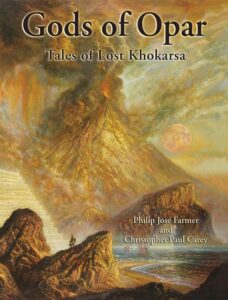
Christopher Paul Carey will get things rolling on August 10. He co-authored The Song of Kwasin with Philip José Farmer, part of a trilogy published by Subterranean Press in the omnibus Gods of Opar: Tales of Lost Khokarsa. He’s also an editor for Paizo Publishing’s Planet Stories imprint, and has edited three collections of Philip José Farmer’s fiction for Subterranean Press. His short fiction appears in anthologies such as the Black Coat Press Tales of the Shadowmen series, The Worlds of Philip José Farmer books from Meteor House, and The Avenger: The Justice, Inc. Files, published by Moonstone Books. Visit him online at Christopher Paul Carey.
For this year’s New Fictioneers readings, Chris will be reading from The Song of Kwasin and Exiles of Kho, forthcoming from Meteor Press. Please join him in the PulpFest 2012 programming area on Friday afternoon at 1 PM.
Bob Eggleton painted the cover for Gods of Opar: Tales of Lost Khokarsa, by Philip José Farmer and Christopher Paul Carey, published in 2012 by Subterranean Press.
Bill Maynard and the Yellow Peril
July 27, 2012 – William Patrick Maynard had the good fortune to be licensed by Sax Rohmer’s literary estate to revive the Fu Manchu thrillers. Black Coat Press published his first novel, The Terror of Fu Manchu, in 2009. He returns to PulpFest this year with its sequel, The Destiny of Fu Manchu.
Bill’s short fiction has appeared in The Ruby Files (Airship 27), Gaslight Grotesque (EDGE Publishing), and Tales of the Shadowmen: Grand Guignol (Black Coat Press). He pens a weekly pulp fiction column for The Black Gate and previously contributed regularly to The Cimmerian. His articles have been published in Blood ‘n’ Thunder and other journals. He is a past nominee of a Pulp Factory Award for Best Pulp Novel and a Rondo Award for Best Genre Article in a Periodical. He recently completed the screenplay for the noir thriller, Tea Money, with the bestselling author of the original novel, Tom Bleecker. Forthcoming are The Occult Case Book of Shankar Hardwicke and a hardboiled detective novel, Lawhead.
Meet “the yellow peril incarnate in one man” as William Patrick Maynard presents The Destiny of Fu Manchu in a New Fictioneers reading on Friday, August 10, at 2 PM.
Win Scott Eckert: Wold Newton New Fictioneer
 July 29, 2012 – Along with Philip José Farmer, Win Scott Eckert co-authored the Wold Newton novel The Evil in Pemberley House, which concerns the daughter of a certain bronze-skinned hero. Win has also written the critically acclaimed two-volume Crossovers: A Secret Chronology of the World, as well as numerous tales featuring adventure and pulp characters, including Sherlock Holmes, Zorro, The Avenger, Captain Midnight, The Scarlet Pimpernel, and The Green Hornet. He is also an editor for Moonstone Books.
As part of PulpFest‘s continuing salute to today’s word slingers known as The New Fictioneers, Win will be reading selections from “Progress,” a tale from The Green Hornet: Still at Large; “According to Plan of a One-Eyed Trickster,” from The Avenger: Tales from the Roaring Crucible, forthcoming from Moonstone Books; and “The Wild Huntsman,” a new Wold Newton story from The Worlds of Philip José Farmer 3: Portraits of a Trickster. He’ll also be available for questions, critiques, autographs, and may have a teaser from a new Philip José Farmer/Wold Newton project.
Join Win Scott Eckert on Saturday, August 11, beginning at 2:30 PM for another New Fictioneers reading. In the meantime, you can find him online at WinScottEckert.com.
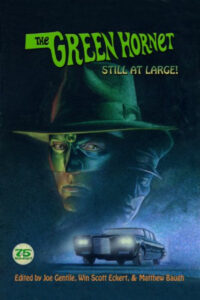
Doug Klauba created the front cover for Moonstone Books’ The Green Hornet: Still at Large. It was published in 2012.
The New Pulp Fiction
July 30, 2012 – Over the last few years, some of today’s finest writers have turned their talents toward pulp fiction. With a growing number of publishers producing what has been termed “New Pulp,” a genre most had thought dead is being reborn. At PulpFest, Airship 27 editor-in-chief Ron Fortier will moderate a panel of writers who will explore this renaissance and what it portends for pulp’s future.
That contemporary pulp fiction is alive and healthy is evidenced by the five writers who will appear on this year’s New Pulp Fiction panel. Included are Jim Beard, author of the Captain Action novel, Riddle of the Glowing Men, that will make its debut at PulpFest 2012; Rick Lai, whose stories have appeared regularly in the Tales of the Shadowmen anthologies published by Black Coat Press; William Patrick Maynard, author of The Destiny of Fu Manchu and The Terror of Fu Manchu, the first authorized Fu Manchu thrillers in over twenty years; Art Sippo, author of Sun Koh: Heir of Atlantis, nominated for best pulp novel of 2010; and Duane Spurlock, an author, editor, and illustrator who has written tales featuring Ki-Gor, the Jungle Lord for both Wild Cat Books and Airship 27, and other “New Pulp” fiction. In Duane’s “A Quiet Night in the Dark in La Plata, Missouri, 1942,” a surprise visitor shares an astonishing story with Doc Savage author Lester Dent, leading to deadly consequences in the writer’s quiet rural town.
Join Ron Fortier and his panelists at 1 PM on Saturday, August 11, for “The New Pulp Fiction.” Audience participation is very welcome.
In Memorium
 July 31, 2012 – The pulp community lost a number of its leading members in 2011 and 2012. Right around the Christmas holidays, Rusty Hevelin and Glenn Lord passed on. Both lived long, fulfilling lives. They will be remembered during two short memorials at this year’s PulpFest.
Unfortunately, the winter months also claimed two other highly regarded pulp fans – David Burton and Howard Hopkins. The former passed in early December and the latter about a month after. Both were in their early fifties.
David was an accomplished artist, writer, and poet. Primarily self-taught, he eventually taught others the craft of illustration, most notably through lessons at his local library. In a way, that sums up what made him so special. He was especially generous, always there for anyone who needed help or advice, and his work for various charities is well documented.
David’s artwork was absolutely stunning. His depictions of Edgar Rice Burroughs’ creations earned widespread critical acclaim. Danton Burroughs suggested that David’s illustrations for A Princess of Mars were probably the best that were ever done. The legendary science-fiction and fantasy author Ray Bradbury commissioned David to paint King Kong for his office. He was friends with Al Williamson, Gary Gianni, Michael Kaluta, and other well-known artists.
Although David remained fairly unknown outside of pop and pulp culture circles, he strove to follow his dreams despite a lack of commercial success.
David Burton was a gentle soul, a humble man, a talented artist, and a good friend. He will be sorely missed.
Howard Hopkins became involved with the pulp community through editing Golden Perils, one of the leading pulp fanzines of the 1980’s. Dubbed the “prettiest fanzine in pulpdom,” it featured articles and artwork on the pulps and other aspects of culture. In print form, it ran for twenty issues. In 2001, Howard began publishing it as an e-magazine, and it ran for another twenty issues.
Editing was just one of Howard’s many talents. He was also a writer. From his home in Maine, he wrote over seventy horror stories, westerns (under the pseudonym Lance Howard), and the children’s series The Chloe Files. He was working on the fifth installment in this series at the time of his death. Additionally, he penned the first book-length study of the Street & Smith character known as The Avenger. Published in 1992, it was entitled The Gray Nemesis
“New Pulp” author and editor Tommy Hancock has written elsewhere:
“Whether or not he was tackling a known character from the vast library of pulp and literature, editing the work of others (who were) putting their own brand on what has come before, or crafting all new tales to terrify, tantalize, and tease from his own expansive imagination, Howard always brought something extra to what he did … There was a vitality, a strength, an ever-present energy to Howard’s work …this palpable wave of excitement, of happiness to be digging his way into this work that wasn’t just a job, but more of a life’s work.”
On Saturday, August 11, at 3:30 PM, please join author Win Scott Eckert and Wild Cat Books publisher Ron Hanna as they celebrate the lives of these two fine men.
Pictured above is one of David Burton’s illustrations for Edgar Rice Burroughs’ A Princess of Mars, published by Leanta Books, and an illustration advertising Howard Hopkins’ The Gray Nemesis, published by Golden Perils Press.
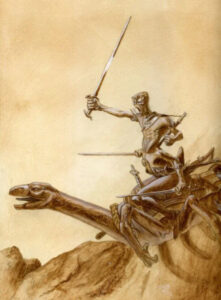
Pictured above is A Charging Thoat, a 2009 work by the late David Burton inspired by Edgar Rice Burroughs’ A Princess of Mars.
Ron Fortier, New Fictioneer
Aug. 4, 2012 – The inimitable editor-in-chief of Airship 27, Ron Fortier has been a professional writer for over twenty-five years. Ron and his business partner, Rob Davis, are two of the leading publishers in the “New Pulp Fiction” category.
Since 2007, Airship 27 has revived long moribund pulp characters such as the Green Lama, Jimmy Anthony, the Masked Rider, Secret Agent X, and Fortier’s own version of Ace Periodicals’ Captain Hazzard. Their books have inspired contemporary writers and artists to turn out new adventures featuring many of the characters long remembered by the pulp community.
At 3 PM on Friday, August 10, Ron will read from his Avenger story, “Vengeance Is Mine,” winner of the Pulp Factory Award for Best Pulp Short Story of 2011. It was published in the Moonstone Books anthology, The Justice Inc. Files. Many thanks to Ron and all our New Fictioneers.
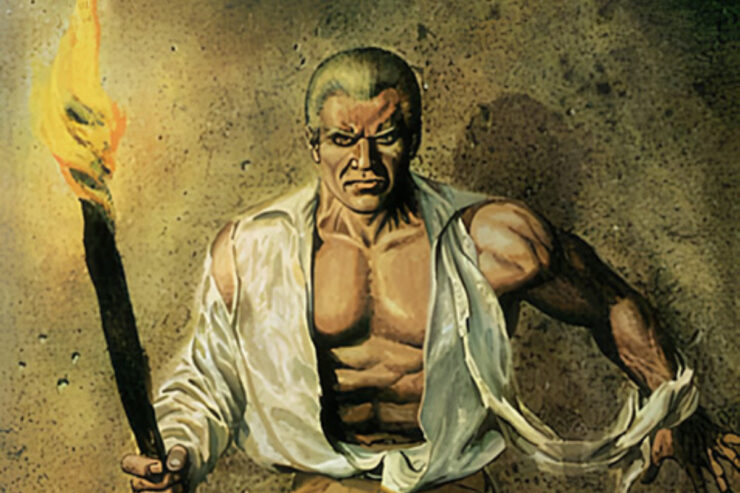
Our featured image is excerpted from Gray Morrow’s cover art for Philip José Farmer’s The Mad Goblin, published by Ace Books in 1970.