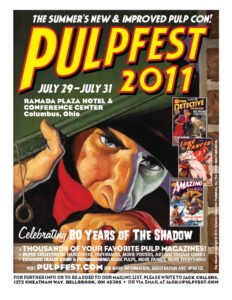
 In this post, we’ll explore PulpFest 2011. It took place at the Ramada Plaza Hotel and Convention Center in Columbus, Ohio, from July 28–July 31, 2011. After extensive advertising through other conventions, book fairs, bookstores, and print ads, our dealers set up in the Ramada’s expanded ballroom, which could hold about 100 eight-foot tables. Unfortunately, the list of dealers who exhibited at PulpFest 2011 is no longer available.
The theme of the convention was “The Shadow at 80,” marking both the 80th anniversary of the launch of The Shadow’s pulp magazine, but also the 80th anniversary of The Shadow’s celluloid debut. The character was featured in six short subjects released to theaters between the summer of 1931 and the spring of 1932.
Early registration and dealer set-up took place on Thursday evening, July 28. The PulpFest 2011 organizing committee ealso sponsored a party in the convention’s hospitality suite on Thursday evening, along with a movie program assembled by Blood ‘n’ Thunder editor Ed Hulse. The dealers’ room opened to all on Friday, July 29, at 9 AM.
In addition to the dealers’ room, PulpFest 2011 offered an impressive programming lineup. Afternoons were mostly set aside for “New Fictioneers” readings. These featured contemporary writers reading from their recent works and fielding audience questions and comments. To learn more about PulpFest’s “New Fictioneers” readings, click here. The convention also held an auction on Saturday, July 30, beginning at 9 PM.
Notably, 2011 was the year FarmerCon joined PulpFest as an associate convention.
FarmerCon Joins PulpFest
On May 26, PulpFest announced FarmerCon VI would be held concurrently at PulpFest 2011. An annual gathering for fans of Grand Master of Science Fiction Philip José Farmer, FarmerCon began in Peoria, Illinois, the late author’s hometown.
It began soon after Phil won the Grand Master Award in 2001. To honor the event, the Peoria Public Library staged a Living Legend Reception for the author. Farmer enthusiast Michael Croteau spread the word through his website, The Official Philip José Farmer Home Page, bringing fans from across the country to Peoria.
In 2006, no longer able to travel to science fiction conventions as they had in the past, Farmer and his wife Bette decided it was time for the mountain to come to Mohammed. Thus, FarmerCon was originally conceived to be a gathering of fans in Peoria, figuratively and literally, right outside Phil’s back door. With programs, speeches, panels, dinners, and picnics at the author’s house, the convention quickly became a great success.
After Phil and Bette Farmer passed away in 2009, the organizers took FarmerCon on the road, giving fans a chance to meet other Farmer devotees who couldn’t travel to Peoria. By holding FarmerCon alongside an event like PulpFest, Farmer fans get a weekend full of programming (including several Farmer-related presentations) and a room full of pulp and book dealers to enjoy. It also keeps Philip José Farmer’s name in the public eye, reminding fans of his long and amazing body of work.

Hot Off the Presses
Editor Tony Davis celebrated The Pulpster’s twentieth anniversary with yet another great issue of his award-winning magazine. The official program guide for PulpFest 2011, the new issue is 44 pages long and features a full-color cover.
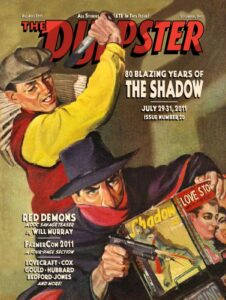 Like this year’s PulpFest, The Pulpster #20 celebrated the 80th anniversary of The Shadow Magazine with a front cover reproduction of the February 1, 1941 Shadow cover by superlative pulp artist Graves Gladney, and its lead article, “The Shadows of 1931,” a look at the first five adventures of the character responsible for the birth of the hero pulp written by last year’s Munsey Award winner, Mike Chomko.
This year’s Pulpster also featured several “firsts.” George Vanderburgh of Arkham House offers a previously unpublished story by English ghost story writer H. Russell Wakefield, along with excerpts from two manuscripts edited by H. P. Lovecraft. In “Return of the Man of Bronze,” Will Murray contributed an exclusive excerpt from his new Doc Savage adventure, The Desert Demons. The last “first” is the four-page supplement at the end of the issue from the good folks of FarmerCon, this year’s “guest convention” at PulpFest.
But there’s more: Don Hutchison recalled the visit of Spider illustrator John Fleming Gould to Pulpcon 19; Pulpster designer Bill Lampkin reviewed William R. Cox’s stories about amateur detective Malachi Manatee from Dime Detective; Monte Herridge wrote about H. Bedford-Jones’ Riley Dillon; Rex Layton unearthed more information on L. Ron Hubbard, just in time for the hundredth anniversary of the author’s birth. And Captain Midnight writer David Walker offered his views on new pulp fiction in “What? New Pulps? How Dare They!”
Except for “Sunday Only” attendees, all PulpFest 2011 members—including supporting members—received a complimentary copy of The Pulpster #20.
Evening Programming (Thursday):
 Edmond Hamilton: From Ohio to the Stars—Best known to many fans as the creator of Captain Future, Edmond Hamilton was one of the first full-time science fiction writers for the pulps. He pioneered and popularized many themes that later became staples of modern science fiction.
On Thursday evening, July 28, at Ohio State University, editor and publisher Stephen Haffner will discuss this popular author’s work for avidly collected pulps such as Weird Tales, Amazing Stories, and Wonder Stories. Haffner’s presentation will include several vintage, rarely exhibited photographs of Hamilton and his contemporaries. A collection of Hamilton first editions will also be on display.
“Edmond Hamilton: From Ohio to the Stars” will take place at 6:30 PM in Room 150A/B in the Thompson Library at the Ohio State campus. The address is 1858 Neil Avenue, Columbus, OH 43210.
Rare Shadow Films Screened—This year PulpFest celebrates the 80th anniversary of the launch of The Shadow, a Detective Magazine that changed the course of pulp history by creating the vogue in rough-paper publications devoted to a single character. Coincidentally, 2011 is also the 80th anniversary of The Shadow’s celluloid debut. The character was featured in six short subjects released to theaters between the summer of 1931 and the spring of 1932. PulpFest, in conjunction with Anthony Tollin’s Sanctum Books, has obtained copies of three Shadow featurettes—including the first—and will kick off its anniversary celebration of The Shadow Magazine by screening them on Thursday evening, July 28.
Advertised as Shadow Detective Mysteries, these two-reel shorts (running about 20 minutes each) followed the format of The Detective Story Hour, the weekly radio program that began in July 1930 and dramatized stories from Street & Smith’s Detective Story Magazine. Created for this show, The Shadow originally served as each episode’s narrator, not its protagonist. His sinister tone and sepulchral laugh—provided by actor Frank Readick—matched what Walter Gibson described in his early Shadow novels.
The radio program’s surprise success not only led to The Shadow’s retooling as a pulp-magazine hero, but also to filmmakers visualizing him in those early “talkie” years, eager to capitalize on the popularity of characters whose adventures traveled over the ether waves. The Detective Story Hour was licensed for screen adaptation less than a year after it began.
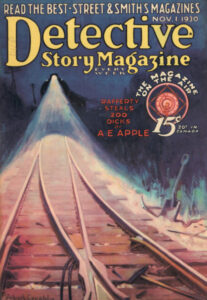 Like the individual radio episodes, each Shadow Detective Mystery was based on a yarn from Detective Story Magazine. The first featurette, “A Burglar to the Rescue,” was adapted from a Herman Landon story of the same title, which appeared in the November 1, 1930 issue of the pulp. Shot in New York City, it starred Thurston Hall, Charlotte Wynters, and Frank Shannon—all of whom would make their marks in Hollywood, the latter as “Dr. Zarkov” in the Flash Gordon serials. The Shadow, seen as a cloaked figure whose silhouette flitted across walls, was voiced by radio’s Readick. Fortunately, this two-reeler is one of the three we’ll screen at PulpFest.
The other two featurettes we’re running, “House of Mystery” and “The Circus Show-up,” are based on Detective Story Magazine yarns by Judson P. Phillips and Leslie T. White, respectively. “Burglar to the Rescue” was screened some years ago at a Hollywood-based film festival shortly after it was discovered and preserved; to date, it has not been exhibited elsewhere. “House of Mystery” and “The Circus Show-up” have not been shown in any public venue since being preserved. PulpFest 2011 attendees will be the first to see these short subjects since their 1932 theatrical engagements.
The PulpFest committee thanks Anthony Tollin, publisher of The Shadow and Doc Savage reprint series, for supporting this undertaking.
Evening Programming (Friday):
The Shadow on Radio—Almost a year before his first appearance in the pulps, The Shadow debuted as the mysterious narrator of The Detective Story Hour, a CBS radio program sponsored by Street & Smith. A ghostly-sounding storyteller with a sinister voice, the character soon had listeners visiting their neighborhood newsstand to ask for “that Shadow detective magazine.” Bowing to popular demand, Street & Smith created The Shadow, a Detective Magazine, and the hero pulp genre was born.
On Friday evening, July 29, popular culture historian Martin Grams continues PulpFest’s salute to the 80th anniversary of the first hero pulp with a slideshow about the radio program that inspired the pulp magazine. Drawing on twelve years of independent research, Martin will offer a fascinating look at The Shadow radio show and explain how it became one of the most recognized and well-known radio programs of all time.
Martin Grams is the author of The Shadow: The History and Mystery of the Radio Program, 1930-1954. His presentation will start at 7:10 PM in the sixth-floor programming area set aside for PulpFest 2011 at the Ramada Plaza Hotel and Conference Center.
Wild American Pulp Artists—What do illustrators Emery Clarke, Robert Harris, and Milton Luros have in common? They were all born in 1911 and later worked for the pulp magazine industry.
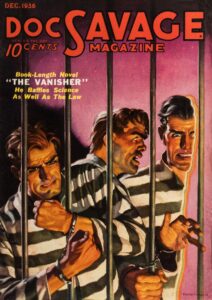 Clarke and Harris are best remembered for their front-cover art on Doc Savage Magazine, while Luros is known for his detective, science fiction, and men’s adventure magazine covers. On Friday, July 29, PulpFest will celebrate the 100th anniversaries of these artists’ births by looking at their lives and work.
“Wild American Pulp Artists” will be presented at 8 PM in the sixth-floor programming area set aside for PulpFest 2011. The speaker will be David Saunders, a leading expert on pulp art and author of numerous articles on pulp artists for Illustration Magazine.
David is also the author of Norman Saunders, a biography and appreciation of his father, the superlative pulp artist. His latest book is H. J. Ward, the most complete examination of the great cover artist for the Spicy pulps. In addition to his writing, David is an accomplished artist whose work appears in the collections of the Metropolitan Museum of Art, the Museum of Modern Art, and other museums and public buildings. He has taught at Yale, Oberlin, and other colleges worldwide and created PulpFest’s Munsey Award.
Granddaughters of the Pulps—Their names are legendary—Frederick C. Davis, creator of Operator #5, The Moon Man, and a slew of detective-pulp heroes; Norvell W. Page, who wrote over 100,000 words per month for the pulps, including more than ninety novels featuring The Spider, the Master of Men; Paul S. Powers, creator of the Sonny Tabor and Kid Wolf stories for Street & Smith’s Wild West Weekly and author of more than four hundred pulp yarns; and Major Malcolm Wheeler-Nicholson who, after writing well over one hundred adventure tales for a wide variety of magazines, went on to create the modern comic book. But to their descendants, they were “grandpa.”
These men all labored mightily in the pulp field, churning out fiction for a penny or two a word in order to support themselves and their families. But as the pulps died, they moved into other fields, leaving behind their rough-paper days. For some, the pulps were forgotten or became a faint memory of bygone days. Their children, grandchildren, nieces, and nephews may have known these men were writers, but few of those pulp-era days were remembered or mentioned.
But those memories weren’t completely forgotten, thanks to pulp collectors and researchers working to unearth the pulp era’s history. Through these efforts, the descendants of pulp greats like Davis, Page, Powers, and Wheeler-Nicholson learned of their forebears’ abundant labors in the pulp vineyard.
PulpFest 2011 is pleased to present “Granddaughters of the Pulps,” a panel featuring four descendants of the aforementioned authors. Elizabeth Bissette, Karen Davis Cunningham, Laurie Powers, and Nicky Wheeler-Nicholson Brown will speak about these four pulp greats and their families. They will also discuss their personal searches to collect what have become important family heirlooms — the pulps that featured their ancestors’ work. Moderated by Blood ‘n’ Thunder editor Ed Hulse, “Granddaughters of the Pulps” will take place at 8:50 PM on Friday, July 29, in the PulpFest programming area.
Elizabeth Bissette is the great-niece of Norvell W. Page, one of the most prolific pulpsters, best known for his Spider novels. A critically acclaimed actress, director, playwright, and producer of multimedia programs, Elizabeth is also a singer/songwriter, rhythm guitarist, fine artist, and art and music writer for Fine Art Magazine and several music websites. She is currently working on adaptations of Beowulf and the pulp character The Purple Scar for Airship 27 and created the Norvell Page Page. Elizabeth lives in Bowling Green, Kentucky.
Karen Davis Cunningham is the granddaughter of author Frederick C. Davis. While she grew up reading many of her grandfather’s mystery novels, she knew little about his pulp career until many years after his death. When she read an article that suggested he’d written over one thousand pulp stories, she began a quest to find out what they were. Her search eventually led her to Pulpcon, in Dayton, Ohio, where she was sucked into the vortex and has not been able to escape since.
In a parallel life in the real world, Karen teaches conflict management at Kent State University and lives with her husband Tom, four cats, Zeke the wonderdog, and two grown children who are leaving the nest but somehow keep finding their way back.
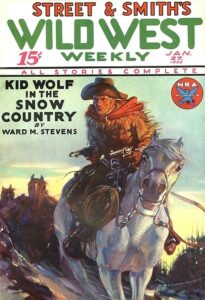 Laurie Powers is the granddaughter of Paul S. Powers, a prolific pulp fiction writer who wrote over 400 stories for rough-paper magazines such as Wild West Weekly, Weird Tales, Thrilling Western, and Texas Rangers. Later, Paul wrote a successful and acclaimed western novel, Doc Dillahay. Laurie didn’t know of her grandfather’s career as a pulp fiction writer until 1999, when she discovered his contributions to Wild West Weekly through an Internet search. Later that same year, she reunited with Paul’s daughter Pat, who gave Laurie her grandfather’s personal papers. Among them was a manuscript, Pulp Writer: Twenty Years in the American Grub Street, Paul’s memoir of being a pulp fiction writer. It was eventually published in 2007.
Laurie recently edited a new collection of Paul Powers’ western stories, Riding the Pulp Trail, which will be available for sale at PulpFest 2011. She is a writer and editor, creator of the Laurie’s Wild West blog, and lives in Los Angeles.
Nicky Wheeler-Nicholson Brown is the granddaughter of Major Malcolm Wheeler-Nicholson, the prolific pulp fiction writer, founder of DC Comics, military intelligence officer, and inventor. Nicky has researched her grandfather’s life and work since 1997. She is a writer, editor, and publisher, co-owning Berkshire Media Artists, with experience in audio, film, animation, and book publishing.
Nicky holds a Master’s Degree in Classical Greek Mythology. Her published work includes articles on the environment, Native American elders, and comic book history, as well as scripts for theatre and animated film. Nicky’s most recent published work includes editing and contributing to Oil and Water and Other Things That Don’t Mix, an anthology benefiting environmental groups on the Gulf Coast, and an article about “The Major” for The Overstreet Comic Book Price Guide. She fell madly in love with the pulp industry when she bought her first pulps featuring The Major’s byline. “The Czarina’s Pearls” was serialized in the July 19 and 26, 1930 issues of Argosy. As determined as Nancy Drew, she has been pursuing the elusive trail of collecting all her grandfather’s works ever since.
FarmerCon at PulpFest—As previously reported, PulpFest 2011 is pleased to welcome the members of FarmerCon VI to this year’s convention. An annual gathering for fans of Grand Master of Science Fiction Philip José Farmer, please visit the PulpFest programming area on Friday evening, July 29, at 10:40 PM for a salute to this celebrated author.
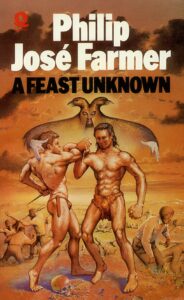 Michael Croteau, creator of The Official Philip José Farmer Home Page, will get things started by explaining the origins of FarmerCon and why it is happening this year at PulpFest. Following Michael’s introductory remarks, Win Scott Eckert will discuss the December 13, 1795 meteor strike in Wold Newton, England, that resulted in a “nova of genetic splendor” — the Wold Newton Universe.
Changing gears, Dr. Art Sippo will delve into A Feast Unknown, the author’s controversial novel that featured thinly veiled versions of Tarzan and Doc Savage.
Tying into PulpFest‘s 80th anniversary salute to The Shadow Magazine, Rick Lai will investigate the character’s ties to the Wold Newton Family and other “secrets” that Farmer knew about the first great pulp hero, The Shadow. Will Murray will close out Friday evening’s programming by reminiscing about interviewing Philip José Farmer in 1990 for Starlog Magazine.
Afternoon Programming (Saturday):
The New Pulp Fiction—Over the last five years, interest in pulp fiction has revived among some of today’s finest writers. With more publishers producing new pulp fiction, a genre most thought dead or long forgotten is being reborn. Our New Pulp panel will explore this renaissance and what it portends for the genre’s future.
That contemporary pulp fiction is alive and healthy is evidenced by the six writers who will appear on “The New Pulp Fiction” panel: Bill Craig, creator of the Hardluck Hannigan seres; Wold Newton expert and popular yarn spinner Win Scott Eckert; Airship 27 and Black Coat Press author Greg Gick; Wayne Reinagel, creator of the Pulp Heroes and Modern Marvels series; Art Sippo, author of Sun Koh: Heir of Atlantis; and Duane Spurlock who has written “A Quiet Night in the Dark in La Plata, Missouri, 1942” and other stories.
“The New Pulp Fiction” will be moderated by Airship 27 editor-in-chief Ron Fortier, and will be held in PulpFest‘s sixth-floor programming area at 1 PM on Saturday afternoon, July 30. Audience participation is very welcome.
Evening Programming (Saturday):
Steampunk at PulpFest—Join 2011 Munsey nominee Garyn G. Roberts at 7:30 PM on Saturday, July 30, in the PulpFest programming area for a discussion of “Steampunk in the Days of Dime Novels and Pulp Magazines.” A longtime pulp fan, Roberts teaches at Northwestern Michigan College, and edited The Prentice Hall Anthology of Science Fiction and Fantasy.
 Garyn’s presentation will investigate the roots of what is today a very popular science fiction category – Steampunk. A throwback to the scientific romances characterized by zeppelins, steam men, monstrous dynamos, mad scientists, and more, some of today’s leading Steampunk writers include James P. Blaylock, William Gibson, China Miéville, Tim Powers, Cherie Priest, Neal Stephenson, and Bruce Sterling.
Professor Roberts will begin with a brief discussion of Jules Verne and H. G. Wells, the two authors who built the foundation of the movement. He will then turn to the dime novels and story papers of the late nineteenth century. These featured such proto-Steampunk characters as the Steam Man of the Prairies, Frank Reade, Jr., and Jack Wright. With the dawn of the twentieth century, pulp magazines began to supplant dime novels and story papers as the leading source for popular fiction. Early examples of Steampunk appear in periodicals such as Argosy, The All-Story, Weird Tales, and the numerous magazines published by Hugo Gernsback, the “father of science fiction,” including Amazing Stories, Science and Invention, Wonder Stories, and Air Wonder Stories.
“Steampunk in the Days of Dime Novels and Pulp Magazines” will be informative, entertaining, and a feast for the eyes, featuring many front-cover images from dime novels, story papers, and pulp magazines. It is not to be missed!
Walter B. Gibson and The Shadow—Following the Thursday-night screening of three rare 1931-32 “Shadow Detective” featurettes and Martin Grams’ Friday-night presentation on the character’s radio incarnation, PulpFest continues its 80th-anniversary celebration of The Shadow Magazine with an all-star panel that will discuss the series and its primary author, Walter B. Gibson.
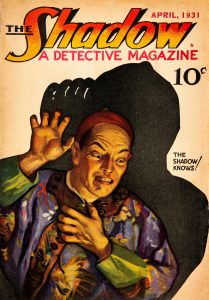 Joining us for what promises to be a lively and informative discussion will be J. Randolph Cox, long-time editor of Dime Novel Round-Up and author of Man of Magic and Mystery: A Guide to the Work of Walter B. Gibson; Will Murray, novelist, historian, and author of The Duende History of The Shadow Magazine; and Anthony Tollin, contributing editor to Gibson’s The Shadow Scrapbook and publisher of the Sanctum Books Shadow reprints. All three knew Walter Gibson well and can offer the audience rare insights into the man’s personality, along with details and critiques of his work.
Between 1931 and 1949, Walter B. Gibson wrote a staggering 283 Shadow yarns—most running between 50,000 and 60,000 words—for a total of roughly fifteen million words. His achievement in fleshing out a character that, previously, was just a voice on the radio is nothing short of monumental in the history of American popular culture. Gibson rode the whirlwind whipped up by his own success, supplying The Shadow Magazine with novel-length stories at the rate of two per month for ten solid years before World War II paper shortages forced the bi-weekly magazine back to monthly frequency. But the indefatigable Gibson, not about to let the grass grow under his feet, filled his spare time with the writing of scripts for The Shadow’s comic-book adventures.
Our panelists will touch on Gibson’s influences, accomplishments and working methods. Blood ‘n’ Thunder editor Ed Hulse, who has himself written at some length about The Shadow, will moderate the panel, which is scheduled to get underway at 8:20 p.m. on Saturday.
C. L. Moore, First Lady of Science Fantasy—After editor Farnsworth Wright had finished reading an unsolicited manuscript entitled “Shambleau,” he closed the Weird Tales office in honor of “C. L. Moore Day.” For the next six years, Catherine Lucille Moore contributed her own brand of sensual, colorful adventures to “The Unique Magazine,” featuring her interplanetary rogue Northwest Smith or Jirel of Joiry, one of the first female protagonists of sword-and-sorcery fiction.
A correspondent of H. P. Lovecraft and Robert Bloch, Moore married writer Henry Kuttner in 1940. Together, they collaborated on many stories. Among her rare non-collaborative efforts following her marriage are “Judgment Night,” “There Shall Be Darkness,” “The Children’s Hour,” and “Vintage Season.” She wrote for Astounding Science-Fiction, Startling Stories, Strange Stories, Thrilling Wonder Stories, and other magazines.
Haffner Press has several volumes of C. L. Moore’s works in production, and editor/publisher Stephen Haffner will offer a 45-minute presentation on the life and career of this respected author, featuring many never-before-seen photographs, images of rare editions, and maybe a word from Ms. Moore herself. Stephen’s well-informed picture of this pioneering writer of science fiction and fantasy will be presented Friday, July 29, at 9:40 PM in the PulpFest programming area at the Ramada Plaza Hotel and Conference Center.
And, of course, we still hope that Mr. Kent Allard, long rumored to be the Dark Avenger whose exploits were recorded in The Shadow Magazine by Walter B. Gibson and others, can still attend PulpFest 2011. Mr. Allard is turning 115 this year, and his plans are still up in the air. Whether or not he can attend, Mr. Allard feels the dynamic programming planned for PulpFest 2011 will be an exceptional salute to the character with whom he has long been associated. He wishes us all a very successful convention.
PulpFest’s 2011 Guest of Honor—A man whose real name rings far fewer bells than his more famous aliases was scheduled to be PulpFest‘s 2011 guest of honor. Born in 1896, Kent Allard entered military service during World War I. It is believed that he served in the United States Army Air Service until he was shot down behind enemy lines. Afterward, he turned this wartime misfortune into a sterling career as an espionage agent, distinguishing himself in ways that remain top secret. It is rumored he single-handedly liberated one Allied POW camp.
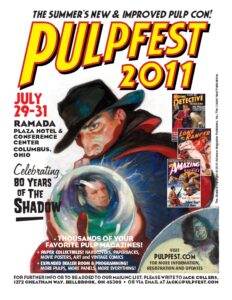 Mr. Allard’s post-war activities remain shrouded in mystery. His 1925 disappearance into the wilds of Guatemala during a mysterious airplane flight baffled searchers for more than a decade. Equally astounding was his celebrated return to civilization in 1937, after twelve years as a “white god” of the legendary Xinca Indians. Mr. Allard faded into obscurity after 1940. Little is known of his shadowy activities after that.
He has been so identified with the late Lamont Cranston that to this day, many people mistakenly believe that Kent Allard was only one of the millionaire sportsman’s alter egos.
Unfortunately, because of his advanced age—Mr. Allard turned 115 in 2011—our guest of honor could not attend the 80th anniversary celebration of The Shadow, a Detective Monthly. Although he couldn’t attend PulpFest 2011, Mr. Allard believed the convention’s dynamic programming was an exceptional tribute to the cloaked character who dominated radio, pulp magazines, and movies for many years.
After the convention, Mr. Allard sent the PulpFest committee a personal message to share with its membership, but almost as soon as the envelope was opened, the blue-ink handwriting faded before anyone could copy it down. But those who read the elusive words recall that the man who was long rumored to be The Shadow thanked the convention for a job well done.
Although Kent Allard couldn’t attend PulpFest 2011, several rumored sightings of a mysterious shadowy figure circulated at the convention. Other attendees reported hearing strange cackling sounds in the hotel’s stairways. Nothing could actually be confirmed.
Unfortunately, another guest, Elizabeth Bissette, the great-niece of Norvell W. Page, also couldn’t attend.
The Munsey Award
On Saturday evening, July 30, Anthony Tollin was named the winner of the 2011 Munsey Award. Nominated by members of the general pulp community, Tony was selected by a panel of judges consisting of all the living Lamont and Munsey Award winners. The award is a fine art print of a painting by David Saunders, published by Dan Zimmer of The Illustrated Press.
 It is very appropriate that in the year that we celebrate the 80th anniversary of The Shadow pulp magazine, Anthony should be the recipient of the Munsey. As of this month, he had reprinted over one hundred adventures of The Shadow, the character created by Walter B. Gibson for the Street & Smith pulp chain.
Anthony worked to convince Condé Nast to authorize reprints of The Shadow, Doc Savage, The Avenger, and The Whisperer. Tony’s regularly issued Sanctum Books are the most popular pulp reprints of our day. Every month, we get to enjoy some of the pulp’s greatest heroes, coupled with informative articles about the authors and artists, the sources for the stories, and the pop culture that they inspired. These books continue to serve as a major gateway for new people to enter the pulp-collecting hobby.
Additionally, Tony co-authored The Shadow Scrapbook with Walter B. Gibson, and assembled and introduced numerous recorded collections of pulp-related radio programs issued by Radio Spirits. He also worked on several comic book interpretations of the great pulp heroes. Tony became a lifelong fan of The Shadow as a child, when his father told him about “the invisible crimefighter who taunted his enemies from the darkness.”
Other candidates for the 2011 Munsey Award included William Contento, Win Scott Eckert, Stephen Haffner, Steve Miller, Matt Moring, Laurie Powers, Garyn Roberts, Phil Stephensen-Payne, George Vanderburgh, and Dan Zimmer.
The Munsey Award, named after the man who invented the pulp magazine, was created in 2009 by talented artist David Saunders. It is an art print, limited to 36 copies, published by Dan Zimmer of The Illustrated Press.
If you believe a person or organization deserves the 2011 Munsey Award, please let us know. Nominations must include a short paragraph or two explaining why you are nominating the person or organization. Send all nominations to PulpFest Marketing and Programming Director Mike Chomko. You can reach him by email at mike@pulpfest.com or by regular mail at 2217 W Fairview St, Allentown, PA 18104-6542.
Many Thanks
The PulpFest Organizing Committee would like to thank the following people and organizations whose invaluable assistance helped to make PulpFest 2011 a tremendous success. We could not do it without you!
Our all-volunteer staff, Maura Childers, Sam Childers, Aaron Cullers, Jack Cullers, Sally Cullers, and Samantha Cullers; our panelists, presenters, and auctioneers, Nicky Brown Wheeler-Nicholson, Randy Cox, Bill Craig, Michael Croteau, Karen Davis Cunningham, Win Scott Eckert, Ron Fortier, Greg Gick, Martin Grams, John Gunnison, Stephen Haffner, Ed Hulse, Rick Lai, Will Murray, Laurie Powers, Wayne Reinagel, Garyn Roberts, Joe Saine, David Saunders, Dr. Art Sippo, Duane Spurlock, and Anthony Tollin; our hospitality suite sponsors, Rusty Burke and the Robert E. Howard Foundation and Michael Croteau, Win Scott Eckert, and Meteor House Press, and the co-sponsor of our Shadow short subject presentation, Sanctum Books; our behind-the-scenes help, Mike Chomko, Chris Kalb, Lohr McKinstry, Michael Neno, Rick and Renee Thomas (who baked the great PulpFest cakes), Barry Traylor, Mark Trost, and Dan Zimmer; and Meri Lynne Stumbo, Beth Sweet, and the rest of the staff at the Ramada Plaza Hotel and Convention Center.
The Organizing Committee would also like to thank the people who helped to create The Pulpster #20: Tony Davis and Bill Lampkin, plus Peter Chomko, Monte Herridge, Don Hutchison, Rex Layton, John Locke, David Rajchel, George Vanderburgh, David Walker, and the magazine’s sponsors – Black Dog Books, Haffner Press, Paul Malmont (who also donated our door prizes), Origins Game Fair, The Pulp Factory, and Recoverings.
Many thanks as well to the nominators and Lamont Award and Munsey Award winners who helped select this year’s winner, Anthony Tollin. Congratulations to our winner and all of the nominees for this year’s award.
Finally, thanks to all of the conventions, book and paper fairs, websites, magazines, newspapers, and other media outlets that helped to promote our show, as well as the dealers, attending members, and supporting members of PulpFest 2011. Your encouragement and support made our convention a great success. We hope to see you all back in the summer of 2012, along with a good many newcomers, for PulpFest 2012. Details will be forthcoming in the months ahead.
Biggest PulpFest Yet
The PulpFest organizing committee would like to thank all of our members for making PulpFest 2011 our most successful convention to date. For the first time, a summer pulp con topped 400 attendees. PulpFest is very proud of that accomplishment.
Thanks as well to everyone who took the time to review PulpFest 2011, both online and off. This includes Nicky Brown Wheeler-Nicholson writing on the website devoted to her grandfather, Major Malcolm Wheeler-Nicholson; Randy Cox in Dime Novel Round-Up; Ron Fortier of Airship 27 on All Pulp; Walker Martin on Mystery*File; Laurie Powers on Laurie’s Wild West; and Duane Spurlock on his PulpRack blog. You can also read about PulpFest from the viewpoint of first-time attendees by visiting the Collectors Society Message Boards and She Never Slept.com, where Sean Lewis, a FarmerCon attendee, reported on his PulpFest experience. Michael Neno has also posted a photographic diary of PulpFest on his Eventized blog under “PulpFest Day One” and “More PulpFest 2011 Pics. Ric Croxton has also posted a multi-part PulpFest Special on his podcast, The Book Cave. Still others have shared photographs and memories of PulpFest on various newsgroups, blogs, and so on.
PulpFest 2012 is still many months away, but there are plenty of other conventions to attend. You’ll be able to read about them here in the coming weeks. So please keep visiting our website.
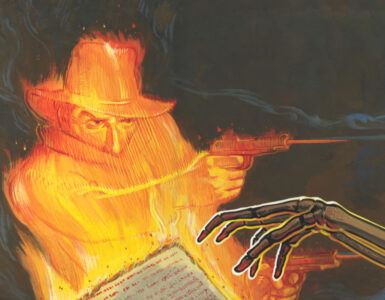
Chris Kalb adapted our lead flyer from George Rozen’s cover art for the September 1932 issue of The Shadow Detective Monthly, illustrating Walter B. Gibson’s “Hidden Death.” An excerpt from Rozen’s cover art also serves as our featured image.
William Lampkin designed the FarmerCon logo and adapted Graves Gladney’s cover for The Shadow’s February 1, 1941 issue for The Pulpster #20.
The four-part serialization of Edmond Hamilton’s “The Vampire Master” began in the October 1933 issue of Weird Tales, which featured one of the most iconic pulp cover paintings, contributed by Margaret Brundage. Hamilton wrote “The Vampire Master” under the pseudonym of Hugh Davidson.
The November 1, 1930 number of Detective Story Magazine, with cover by John A. Coughlin, published Herman Landon’s “A Burglar to the Rescue.” The story was adapted as the first “Shadow” film featurette. Note the “The Magazine On the Air” label on the magazine’s cover.
Doc Savage Magazine for December 1936, with cover by Robert G. Harris, illustrating Lester Dent’s “The Vanisher.”
H. Winfield Scott contributed the cover art for the January 27, 1934 issue of Street & Smith’s Wild West Weekly. Paul S. Powers wrote “Kid Wolf in the Snow Country” under the pseudonym Ward M. Stevens.
The first British printing of Philip José Farmer’s controversial novel, A Feast Unknown, was published in 1975 by Quartet, with cover art by Patrick Woodroffe.
Our illustration is the October 23, 1903 issue of Frank Reade Weekly Magazine. The cover artist is unknown.
The Shadow, a Detective Monthly, dated April 1931, featured a cover by Modest Stein. The artist’s painting had been previously used as the cover for the October 1, 1919, issue of The Thrill Book, illustrating H. Bedford-Jones’ “Mr. Shen of Shensi.”
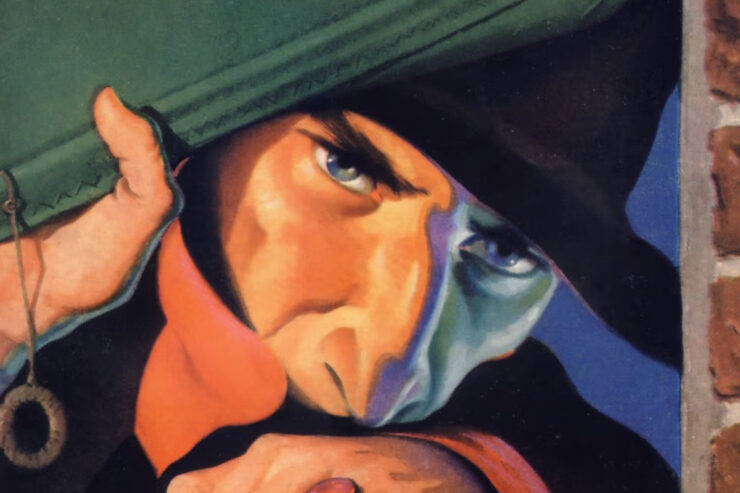
Chris Kalb adapted this flyer from George Rozen’s cover art for the March 1932 issue of The Shadow Detective Monthly, illustrating Walter B. Gibson’s “The Black Master.” It’s also our featured image.